
Unauthorized drone activity surged by over 30% in 2024 at critical locations—including airports, prisons, and power plants—where perimeter boundaries shift during events and traditional sensors struggle to distinguish threats amid urban clutter. At major transportation hubs, incidents triggered multi-hour shutdowns and economic losses exceeding $740k per hour (Industry Analysis 2024). Malicious actors exploit gaps in fixed defenses, using drones for contraband drops, surveillance, or precision payload delivery.
Stationary counter-drone systems leave critical coverage voids during VIP movements, large-scale events, or emergency responses—their static nature prevents adaptation to evolving threat patterns. Manual detection methods—visual spotting or handheld RF scanners—fail against low-altitude, autonomous, or stealth-configured drones, with average response times exceeding 15 minutes. Mobile drone jamming devices overcome these constraints: security teams deploy them rapidly to intercept threats within seconds, cover blind spots without infrastructure changes, and apply directional jamming that neutralizes specific drones while minimizing collateral signal disruption.
Mobile drone jamming devices neutralize threats by transmitting focused radio frequency (RF) energy to disrupt two essential communication links: the 2.4GHz and 5.8GHz control signals between operator and drone, and GPS/GNSS navigation frequencies near 1.5GHz. When activated, the jammer floods these bands with higher-power noise, severing command telemetry and satellite positioning data. This triggers built-in failsafes—most unauthorized drones either hover, return to launch, or land immediately. Unlike kinetic solutions, portable RF jammers achieve rapid, non-destructive neutralization by exploiting inherent design vulnerabilities in consumer and prosumer UAV platforms.
Designing field-effective mobile jammers requires careful trade-offs among three interdependent factors:
While fixed installations offer greater sustained power and coverage, portable jammers fill an irreplaceable operational niche. During temporary events or emergency deployments, vehicle-mounted systems can establish a 300m protective zone in under two minutes—enabling dynamic, infrastructure-free defense where permanent solutions are impractical or prohibited.

Portable jammers are now frontline tools in correctional facility security—disrupting control and GPS links to force unauthorized drones to land or abort before reaching prison grounds. A single successful delivery can introduce over $740k in contraband (Ponemon Institute, 2023), making rapid, targeted intervention essential. Unlike broad-spectrum RF blockers, modern mobile jammers use adaptive frequency targeting to minimize interference with on-site communications while ensuring consistent drone mitigation.
For power substations, stadiums, disaster response zones, and other transient high-risk sites, mobile jammers provide immediate, scalable protection where fixed systems are cost-prohibitive or logistically unfeasible. Their compact footprint enables full setup in under 10 minutes—even in confined or elevated positions—to shield sensitive assets during evolving threats. Market analysis projects 25% annual growth in demand for agile counter-drone solutions, underscoring their strategic value across dynamic operational environments.
Operating a drone jamming device legally requires strict adherence to national and international electromagnetic regulations. Governments classify these systems as restricted technology due to risks of interfering with air traffic control, emergency services, and public safety communications. In the U.S., the Federal Communications Commission (FCC) prohibits civilian use outright; only federal agencies, law enforcement, and authorized critical infrastructure operators may deploy jammers under explicit government authorization. Similarly, the European Union Aviation Safety Agency (EASA) restricts operational use to licensed entities in high-risk sectors—and mandates real-time spectrum monitoring and geofenced activation protocols.
Key compliance requirements include:
A 2022 Federal Aviation Administration (FAA) study confirmed that unauthorized jamming could trigger fines exceeding $740k per incident—reinforcing why organizations must embed jamming operations within broader, certified security architectures rather than treating them as standalone tools.
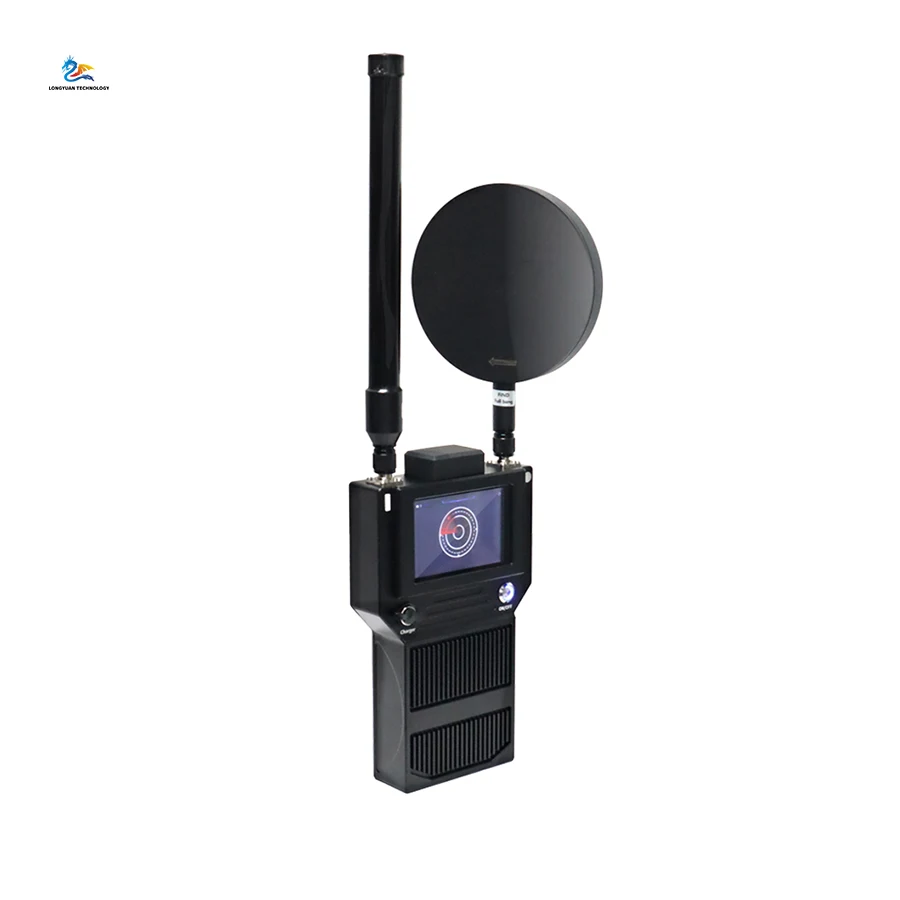
A mobile drone jamming device is a portable tool designed to disrupt the communication and navigation systems of unauthorized drones by transmitting high-power radio frequency signals that interfere with control links and GPS signals.
Most devices are effective against consumer and prosumer drones, exploiting common design vulnerabilities. However, advanced military or custom-built drones may require specialized countermeasures.
No, in many countries, including the U.S., civilians are prohibited from using jamming devices. Only authorized entities like law enforcement and critical infrastructure operators may deploy them under strict regulations.
They are widely used in sectors like prison security to prevent contraband delivery, critical infrastructure protection during events, and temporary shielding for high-risk locations.
Legal deployment requires formal authorization, specialized training, real-time spectrum monitoring, and adherence to national and international electromagnetic regulations.

Shenzhen Longyuan Technology provides intelligent counter-drone systems for airports, stadiums & critical infrastructure. Real-time RF detection, tracking, and jamming with high-gain antennas and custom solutions. Trusted by global security teams.
Building A,Kaishangde Industrial Park,No. 1 Xinghua Road, Pingdi Sub-district, Longgang District, Shenzhen City
Copyright © 2026 Shenzhen Longyuan Technology Co., Ltd. All rights reserved. Privacy Policy
 EN
EN


 Hot News