
Advanced anti-drone modules rely on sophisticated detection systems to identify unauthorized UAVs (Unmanned Aerial Vehicles) before they become threats. Instantaneous drone identification requires processing complex visual, radio-frequency, thermal, and acoustic signatures within sub-second timeframes.
High-performance counter-UAS systems combine multiple sensing technologies—rather than relying on a single modality—to overcome individual limitations and deliver robust, environment-agnostic detection. Each sensor contributes unique capabilities:
| Sensing Technology | Key Strength Against Drone Threats | Common Limitations |
|---|---|---|
| Radar | Long-range tracking (1km+) of small metallic targets | Struggles to distinguish drones from birds or clutter without AI-enhanced pattern analysis |
| RF Scanning | Detects command-and-control signals (e.g., 2.4/5.8 GHz bands) in dense urban settings | Ineffective against fully autonomous or pre-programmed drones operating without active radio links |
| EO/IR Cameras | Enables high-resolution visual confirmation and thermal detection at night | Requires line-of-sight and is range-limited (~500 m); performance degrades in fog, rain, or smoke |
| Acoustic Sensors | Passively identifies propeller noise signatures—no emissions required | Highly susceptible to ambient noise (traffic, wind, machinery), limiting reliability in industrial or urban zones |
By fusing these inputs, modern systems achieve 95% detection probability across diverse environments—from stadiums to critical infrastructure—while significantly reducing false positives caused by birds, weather artifacts, or civilian RF interference. Sensor fusion software correlates timestamps, trajectories, and spectral signatures to generate a unified, real-time air picture.
Sub-second response hinges on AI models deployed directly on edge hardware—not cloud-dependent inference. Modern systems leverage embedded GPUs to execute neural networks trained on over 100,000 labeled drone and non-drone samples. These models classify threats using multimodal data: kinematic behavior (acceleration, turn rate), silhouette geometry, RF modulation patterns, and acoustic frequency profiles.
Crucially, adaptive learning engines update classification logic in near real time—incorporating new drone models and evasion tactics without manual retraining. Offline-capable architecture ensures uninterrupted operation during RF jamming or network denial—a key requirement per NATO STANAG 4703 on resilient C-UAS design. This enables threat identification and countermeasure initiation in under 500 ms, shrinking the decision cycle from seconds to milliseconds and enabling effective defense against fast-moving or swarm-based attacks.
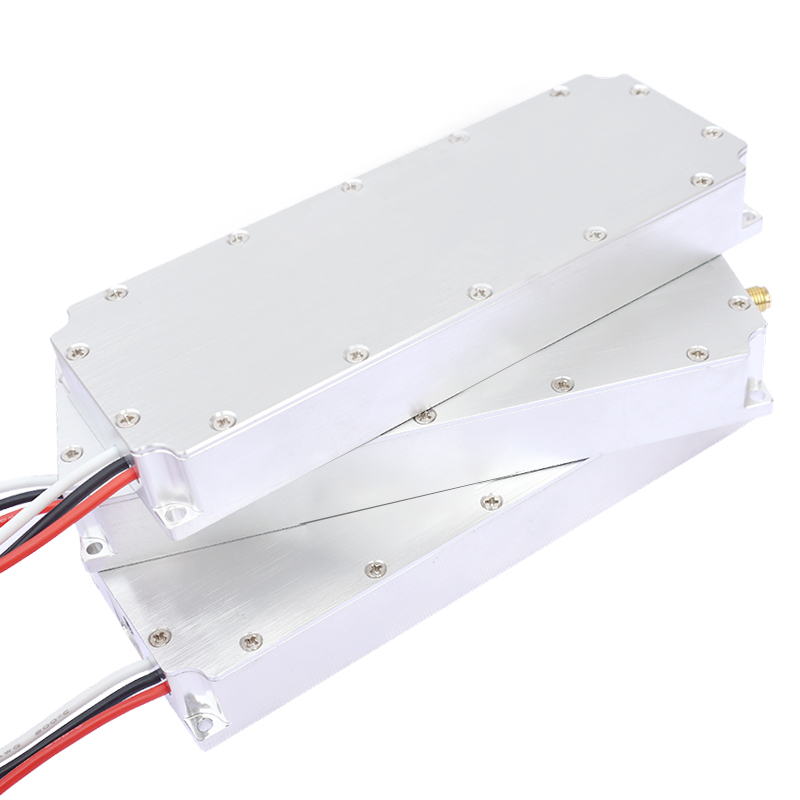
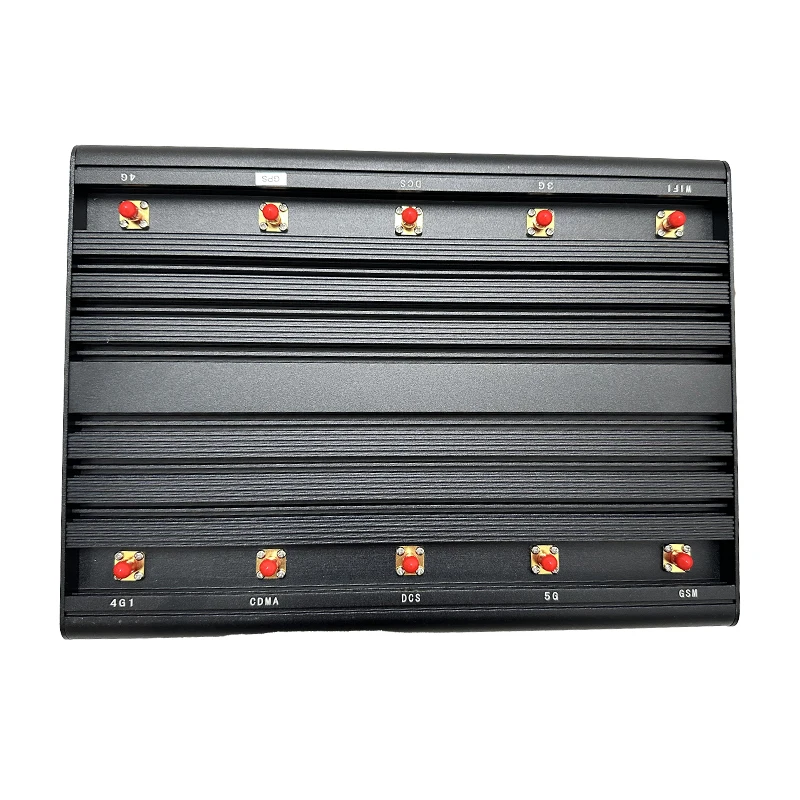
Effective counter-UAS operations require strategic alignment between threat profile and mitigation method. Electronic neutralization—including RF jamming, GPS spoofing, and cyber takeover—disables drones without physical destruction, making it ideal for populated areas where falling debris poses unacceptable risk. Jamming breaks the control link, triggering failsafe landing or return-to-home; spoofing manipulates navigation signals to safely redirect the UAV. Cyber takeover offers precise control but demands deep protocol-level access and is less viable against encrypted or proprietary flight stacks.
Kinetic interception—via net guns, directed-energy lasers, or projectile systems—provides definitive neutralization but introduces collateral hazards. Net launchers suffer from limited engagement range and low hit probability against agile or high-speed targets; lasers face atmospheric attenuation and regulatory constraints; projectiles carry inherent safety and legal liability concerns.
The choice isn’t binary—it’s contextual. Urban venues, airports, and government facilities prioritize electronic methods for safety and compliance with FCC Part 15 and ITU-R SM.2027 guidelines. Remote military or industrial sites may integrate kinetic options where risk tolerance permits—provided they meet DoD Directive 3140.06 requirements for non-kinetic-first escalation protocols.
AI transforms reactive defense into proactive, scalable protection. Machine learning models ingest fused sensor data to assign dynamic threat scores based on velocity, altitude, proximity to protected assets, flight path intent, and known adversary TTPs (tactics, techniques, and procedures). A slow-flying recreational quadcopter near a perimeter fence may trigger only an alert; a fixed-wing UAV accelerating toward a power substation activates immediate electronic neutralization.
Automated response selection reduces cognitive load on operators and compresses the OODA loop—detect, orient, decide, act—by up to 70%, according to U.S. Air Force C-UAS test reports. The system recommends or executes the optimal countermeasure based on preconfigured rules, real-time environmental constraints (e.g., RF congestion, weather), and mission-critical priorities. As swarm tactics evolve—leveraging decentralized coordination and adaptive evasion—this AI-guided, layered response architecture becomes essential for maintaining operational advantage.
When evaluating an anti-drone module for enterprise deployment, three core metrics define operational readiness: detection range, response time, and neutralization effectiveness. These are not theoretical benchmarks—they must be validated under realistic conditions, including urban multipath interference, variable drone speeds (0–120 km/h), and mixed flight profiles (hovering, diving, swarming).
Detection range determines the window available for assessment and action. While radar alone may detect objects at 10 km, reliable identification—not just detection—typically occurs within 3–5 km for multi-sensor systems, as confirmed by independent testing conducted under EN 50677:2020 standards.
Response time measures end-to-end latency: from initial sensor trigger to countermeasure activation. Top-tier systems achieve full classification and mitigation initiation in 2–3 seconds—enabled by on-device AI inference that eliminates cloud dependency and associated latency.
Neutralization effectiveness reflects real-world success rates—not lab conditions. For non-kinetic methods like RF jamming, this means sustained command-link disruption across the stated operational radius; for spoofing, it’s consistent, safe redirection without unintended drift. The table below compares representative field-tested performance across common mitigation types:
| Metric | RF Jamming | GPS Spoofing | Laser Systems | Kinetic Capture |
|---|---|---|---|---|
| Detection Range | 3–5 km | 3–5 km | 3–5 km | 1.5–2 km |
| Response Time | 2–3 seconds | 1–2 seconds | 1–2 seconds | 5–10 seconds |
| Max Neutralization Range | 4–5 km | 5 km | 3–4 km | 1.5 km |
| Primary Limitation | Frequency coverage gaps limit efficacy against spread-spectrum or hopping radios | Vulnerable to GNSS-denied environments and requires stable signal injection | High cost; reduced effectiveness in rain, fog, or dust | Single-target engagement; low probability of intercept against evasive maneuvers |
Enterprise buyers should demand third-party validation reports—such as those from the UK’s National Cyber Security Centre (NCSC) or Germany’s BSI TR-03127—for each metric, rather than vendor-provided claims.
An enterprise-grade anti-drone module must evolve alongside adversarial innovation. Today’s threats include frequency-hopping controllers, GNSS-spoofed navigation, AI-driven evasion algorithms, and coordinated swarms designed to saturate static defenses.
Electronic warfare (EW) hardening ensures system survivability under deliberate RF attack—meeting MIL-STD-461G limits for radiated susceptibility and EMP resilience. GNSS protection employs multi-constellation (GPS, Galileo, GLONASS, BeiDou) receivers with cryptographic authentication (e.g., Galileo OS-NMA) and inertial aiding to maintain positioning integrity during spoofing attempts—critical for geofencing accuracy and autonomous response fidelity.
Counter-swarm scalability relies on distributed, synchronized sensor nodes and parallelized countermeasure channels. Unlike legacy centralized architectures, resilient systems allocate resources dynamically: one node may jam while another spoofs, all coordinated via secure mesh networking compliant with IEEE 802.15.4g. This architectural triad—EW hardening, GNSS integrity, and scalable parallel engagement—is non-negotiable for protecting high-value assets against next-generation drone threats.
Anti-drone detection systems utilize technologies such as radar, RF scanning, EO/IR cameras, and acoustic sensors to detect and identify UAVs.
AI accelerates drone classification by using embedded GPUs to analyze attributes like kinematic behavior, silhouette geometry, and acoustic frequency profiles, enabling sub-second response times.
Electronic countermeasures (e.g., RF jamming, GPS spoofing) disable drones non-destructively, while kinetic options (e.g., lasers, projectiles) physically neutralize the threat, often with added risks.
Critical metrics include detection range, response time, and neutralization effectiveness. These should be validated in real-world scenarios to ensure operational readiness.
Resilient systems use distributed sensors, scalable countermeasure channels, and secure mesh networks to address threats like coordinated drone swarms and adaptive evasion tactics.

Shenzhen Longyuan Technology provides intelligent counter-drone systems for airports, stadiums & critical infrastructure. Real-time RF detection, tracking, and jamming with high-gain antennas and custom solutions. Trusted by global security teams.
Building A,Kaishangde Industrial Park,No. 1 Xinghua Road, Pingdi Sub-district, Longgang District, Shenzhen City
Copyright © 2026 Shenzhen Longyuan Technology Co., Ltd. All rights reserved. Privacy Policy
 EN
EN


 Hot News