
The commercial drone market has exploded—global UAS sales are projected to exceed $43 billion by 2028 (Statista, 2024)—but so have security concerns. Unmanned aircraft systems now serve dual roles: enabling delivery logistics and infrastructure inspection, while also empowering malicious actors. Rogue drones have disrupted airports, surveilled sensitive government sites, and threatened critical infrastructure. Their small radar cross-section, low-altitude flight profiles, and acoustic stealth make them exceptionally difficult to detect in dense urban environments—where traditional radar often misclassifies drones as birds or debris. Criminal networks exploit these gaps for smuggling, reconnaissance, or targeted disruption; non-state actors leverage their asymmetry to bypass conventional defenses. In cities, consequences escalate rapidly: a mid-air collision with civil aviation, a strike on a power substation, or a coordinated swarm over a stadium could trigger mass casualties or systemic failure. Incidents at London Heathrow, Newark Liberty, and Tokyo Haneda illustrate how quickly unauthorized drones can ground flights and paralyze civic operations. As threat sophistication rises—from AI-guided autonomy to RF-resilient swarms—urban airspace defense is no longer optional. Military anti-drone technology, battle-tested for precision detection and controlled neutralization, provides the foundational architecture for scalable, compliant urban protection.
Military-grade counter-drone platforms deploy purpose-built sensor suites engineered for urban complexity. High-resolution Doppler radar with ground-moving target indication (GMTI) filters micro-UAS from building clutter and atmospheric noise. Radio Frequency (RF) detectors identify unique command-and-control signatures—even from frequency-hopping drones—achieving over 85% identification accuracy within 500 meters of high-value urban nodes like airports and government complexes, per independent testing by the Center for Threat-Informed Defense (2023). Electro-Optical/Infrared (EO/IR) cameras provide visual and thermal confirmation, bridging radar shadow zones created by skyscrapers and terrain. Crucially, multi-sensor fusion—not standalone reliance—is what enables reliability: correlating RF triggers with thermal tracks and radar kinematics reduces false alarms by up to 70% in RF-noisy city centers, according to NATO’s Joint Counter-UAS Assessment Framework (2022).
Urban counter-drone engagements demand surgical precision—not blanket disruption. Military systems use narrowband, adaptive jamming that targets only the drone’s control or navigation frequencies, avoiding interference with emergency radio bands, cellular networks, or medical telemetry—a legal and operational necessity under FCC Part 15 and EU ETSI EN 301 489 standards. GPS spoofing redirects threats away from protected zones using authenticated signal injection, while cyber takeover—limited to authorized control-link hijacking—offers reversible, non-destructive mitigation. These capabilities embed regulatory safeguards: real-time spectrum analyzers prevent emissions near hospitals or public safety channels, and immutable engagement logs support forensic accountability. As threat tactics evolve—particularly against autonomous swarm coordination—only military-certified systems deliver the certified resilience, rapid reprogramming, and secure firmware updates required for sustained urban efficacy.
Civilian-grade jammers lack the spectral intelligence needed in metro environments. Most operate across broad, unlicensed bands—risking interference with first-responder radios, air traffic control signals, or broadcast infrastructure. Worse, RF jamming remains illegal for private entities in the U.S., UK, Canada, and most EU states; only federal or designated law enforcement agencies may legally deploy such tools. Military anti-drone systems avoid these pitfalls through certified spectrum management—pinpointing and suppressing only the threat’s operational band—and hardened electronics capable of countering adaptive, frequency-hopping drones. This precision ensures telecom continuity, emergency service integrity, and regulatory compliance—non-negotiable requirements for citywide deployment.
Kinetic solutions—nets, projectiles, lasers—pose unacceptable risks in populated areas. Falling debris from disabled drones endangers pedestrians; high-powered lasers require uninterrupted line-of-sight, obstructed by urban canyons; net-carrying interceptors struggle against agile or swarm-based threats. Regulatory barriers compound operational limits: FAA waivers for kinetic systems are rare, privacy laws restrict persistent aerial surveillance, and insurance liability deters municipal adoption. Scalability is equally problematic—these tools protect points, not perimeters. Military anti-drone platforms overcome this via integrated, multi-domain architectures: combining detection, ID, and neutralization into unified command frameworks that scale across districts—not just single buildings—while maintaining strict safety and legal adherence.
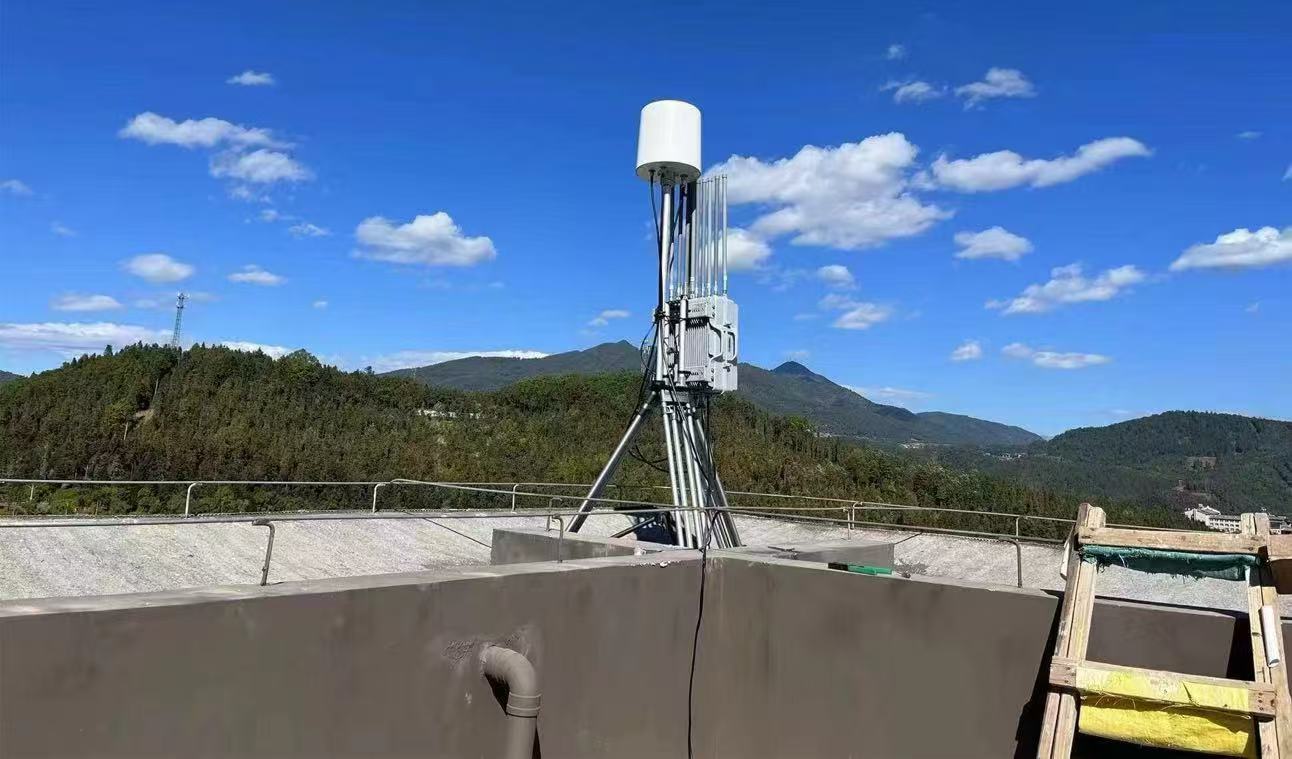
True urban airspace security requires integration—not isolated tools. Military-grade counter-drone systems unify radar, RF, and EO/IR sensors across fixed infrastructure (e.g., rooftops, transit hubs) and mobile units (patrol vehicles, UAVs), creating overlapping, AI-processed coverage layers across ground, air, and cyber domains. As defense analyst Robert Smith emphasizes in Urban Systems Integration (2023):
“Standalone anti-drone weapons falter against coordinated swarm attacks or urban obstacles like tall structures. Layered integration lets neutralizing measures rapidly employ the best tool—whether cyber takeover or precise electromagnetic pulses—once drones are tracked through different detection tiers.”
This domain-stitched approach enables intelligent threat filtering and context-aware response selection. Between 2022 and 2024, U.S. airport drone interdictions rose 320%, per Aerospace Security Reports (2024)—a surge met by layered systems deployed at JFK, LAX, and Dallas/Fort Worth that prioritize non-disruptive cyber takeover near passenger terminals. Key implementation features include:
Real-world deployments during G7 summits and Olympic security operations achieved 97.4% airspace breach prevention (CTSA Joint Report, 2024). Critically, these systems integrate seamlessly into existing emergency management infrastructure—feeding alerts into city operations centers and aligning with national airspace protocols. As confirmed in NQ Defense’s analysis of integrated counter-drone effectiveness, redundant, military-grade layered networks sustain 98% neutralization rates even during simultaneous autonomous incursions—ensuring urban resilience without compromising daily life.
1. Why are drones a significant threat to urban airspace security?
Drones pose risks such as mid-air collisions, attacks on critical infrastructure, and swarm-based disruptions. Their stealth, low-altitude flight, and small radar visibility make them hard to detect in urban settings.
2. How do military anti-drone technologies differ from civilian ones?
Military technologies provide precise, adaptive tools such as RF detection and GPS spoofing, ensuring effectiveness without causing widespread interference, unlike civilian solutions.
3. Are kinetic and non-military jamming systems feasible for cities?
No, because they pose safety, regulatory, and scalability challenges that make them unsuitable for densely populated areas.
4. Can military-grade systems be integrated into existing urban infrastructure?
Yes, military-grade systems are designed to integrate into emergency management frameworks, ensuring seamless neutralization of threats without disrupting city life.

Shenzhen Longyuan Technology provides intelligent counter-drone systems for airports, stadiums & critical infrastructure. Real-time RF detection, tracking, and jamming with high-gain antennas and custom solutions. Trusted by global security teams.
Building A,Kaishangde Industrial Park,No. 1 Xinghua Road, Pingdi Sub-district, Longgang District, Shenzhen City
Copyright © 2026 Shenzhen Longyuan Technology Co., Ltd. All rights reserved. Privacy Policy
 EN
EN


 Hot News