
Commercial delivery drones, tactical surveillance UAVs, and autonomous inspection units rely almost entirely on GPS for navigation, return-to-home functions, and flight stabilization. During mobile operations—whether traversing a city skyline, patrolling a border corridor, or executing time-sensitive logistics—GPS becomes a single point of failure. Urban environments intensify this risk: multipath reflection from tall buildings, complete signal loss in tunnels, and RF congestion from 5G, Wi-Fi, and vehicle telematics degrade positioning accuracy and reliability. A static-perimeter GPS jammer lacks the agility needed for these conditions. Effective mobile defense requires adaptive power output, stable frequency lock while in motion, and thermally efficient design—without bulky cooling systems. Without such specialization, drone fleets face mission failure, mid-air collisions, or uncontrolled landings in sensitive or restricted areas.
Real-world incidents confirm that mobile drone operations are routinely compromised by GPS interference. In 2023, an e-commerce logistics trial in a major metropolitan area saw two delivery drones initiate emergency landings after losing GPS lock for 40 seconds—traced to a portable jammer operating near a construction site. Border patrol agencies reported over a dozen cases where surveillance drones lost positional awareness while tracking moving targets along fence lines. Similarly, railway and pipeline inspection drones experienced sudden GPS dropouts when passing near substations or communication towers emitting unintentional jamming signals. These examples underscore a key operational truth: static jammers cannot reliably protect platforms in motion. Mobile operators now require compact, frequency-agile solutions capable of sustaining effective disruption—or protection—across shifting terrain and RF environments.
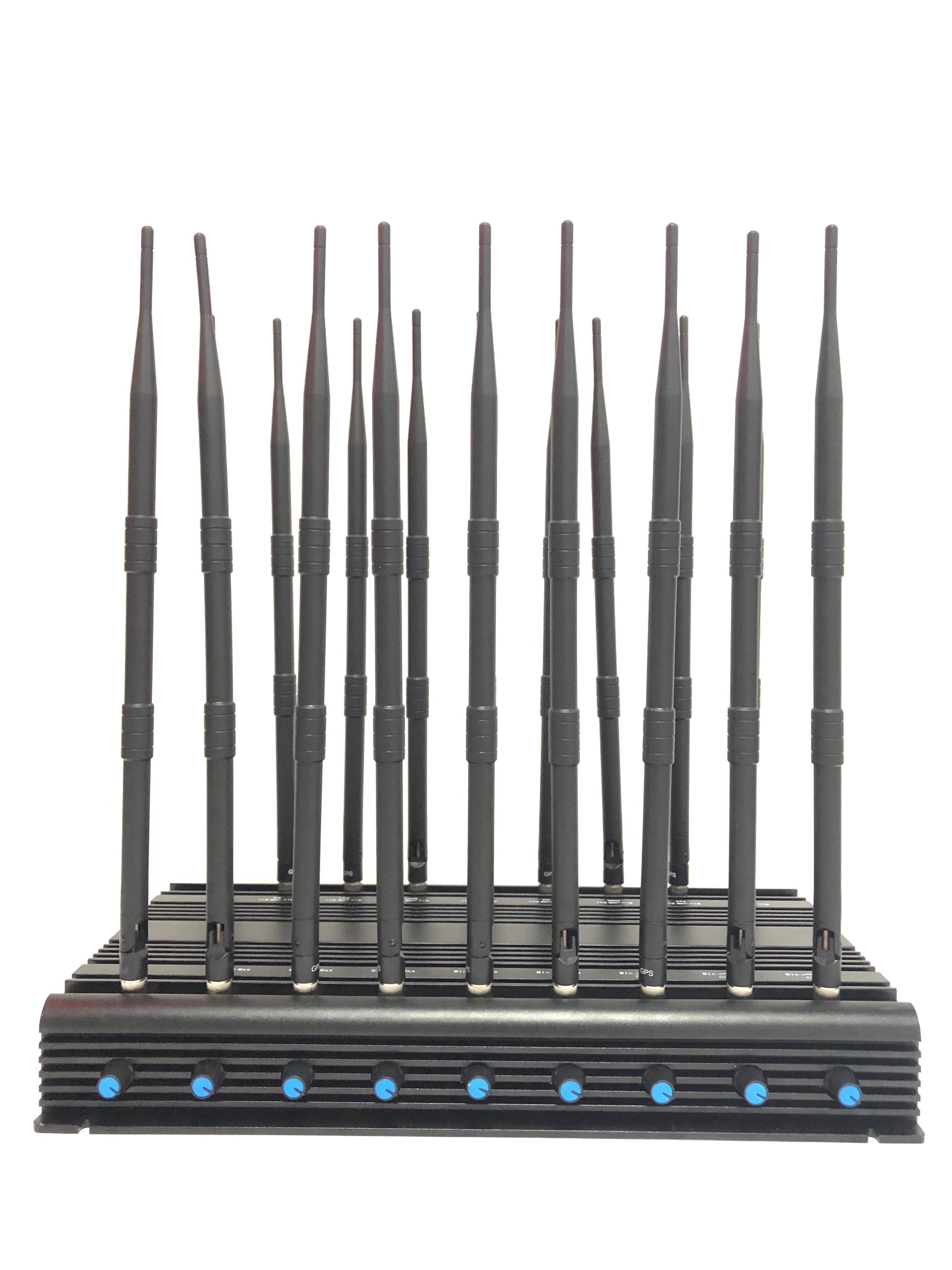
A truly mobile drone GPS jammer must prioritize size, weight, and thermal performance without sacrificing effectiveness. Portable units typically operate at 5–20 watts—enough for field-deployable disruption while preserving battery life and minimizing heat generation. Systems exceeding 100 watts demand active cooling, which is impractical for vehicle-mounted or handheld use. Efficient power circuitry and passive heat dissipation are essential when mounted on moving platforms, where ambient temperature and airflow fluctuate unpredictably. Thermal resilience ensures consistent operation across extended missions—from urban patrols to remote infrastructure inspections—without performance degradation or hardware failure.
Effective jamming range depends less on raw power than on environmental context and spectral targeting. Most portable jammers cover 2.4 GHz and 5.8 GHz bands used for drone control and video downlink; advanced models also target GNSS frequencies (L1/L2/L5) to disrupt GPS, GLONASS, Galileo, and BeiDou. While ideal-range claims reach 500 meters, real-world effectiveness drops significantly with obstacles, altitude, and atmospheric conditions. Frequency precision is critical—not only to avoid collateral interference with emergency services or cellular networks but also to maintain disruption against modern drones using multi-constellation receivers. Signal persistence poses the greatest challenge in motion: a jammer must sustain output and frequency lock as it moves through varying RF landscapes. Directional antennas with dynamic gain adjustment help retain focus on fast-moving threats—ensuring reliable engagement even at speed.
A drone GPS jammer gains strategic value only when embedded within a layered counter-UAS architecture. Modern defenses combine RF jamming with radar detection, thermal imaging, and AI-powered sensor fusion to identify, classify, and assess threat intent before intervention. Integrated software platforms—built on secure-by-design embedded systems—enable real-time coordination between detection layers and jamming modules. For mobile operations, this means the jammer must dynamically adjust frequency bands and power output based on threat classification, drone behavior, and environmental data. Crucially, integration prevents unintended consequences: jamming that degrades friendly navigation or interferes with critical communications undermines operational safety. When deployed as one component of a holistic cybersecurity strategy—rather than a standalone “silver bullet”—the drone GPS jammer delivers resilient, adaptive protection against evolving UAS threats.
National security agencies increasingly deploy portable drone GPS jammers to defend dynamic perimeters. Between 2023 and 2024, border patrol units integrated handheld and vehicle-mounted systems to neutralize surveillance drones shadowing patrols across rugged, uneven terrain. These compact units disrupted unauthorized UAVs’ GPS links within seconds—forcing immediate landing or return-to-launch protocols. At a major power substation, a portable jammer disabled a persistent reconnaissance drone in under five seconds, preventing the mapping of critical infrastructure. The consistent lesson: fixed-site jammers offer no protection for moving assets. Tactical resilience hinges on mobility, rapid deployment, and seamless operator integration—making portability not optional, but foundational.
Civilian applications operate under stricter technical and regulatory constraints. Urban delivery drones function in spectrally dense environments where a GPS jammer must disable rogue UAVs without disrupting nearby cellular networks, public safety radio, or emergency services. Drone-in-a-box systems add complexity—the jammer must be isolated from the docking station’s own GPS receiver to avoid self-interference. Field trials in 2024 demonstrated that low-power, frequency-precise jammers can effectively neutralize unauthorized drones within a 200-meter radius while preserving surrounding 4G/5G and Wi-Fi integrity. Yet legal compliance remains the most significant barrier: civilian use of RF jammers is prohibited in most jurisdictions outside authorized security deployments. As a result, adoption is largely limited to government-contracted firms and certified pilots operating under strict oversight—highlighting that operational resilience must always be calibrated against regulatory reality.
Drone GPS jammers are critical for mobile operations as they protect moving assets from GPS interference, ensuring operational safety and preventing mission disruption.
Key features include portability, efficient thermal management, precise frequency targeting, and the ability to adapt to varying RF landscapes during movement.
They are embedded within broader counter-UAS architectures, working alongside tools like radar, thermal imaging, and AI-based systems for comprehensive threat assessment and prevention.
Drone GPS jammers are typically restricted to authorized security deployments, and their civilian use is prohibited in most jurisdictions due to regulatory and safety concerns.

Shenzhen Longyuan Technology provides intelligent counter-drone systems for airports, stadiums & critical infrastructure. Real-time RF detection, tracking, and jamming with high-gain antennas and custom solutions. Trusted by global security teams.
Building A,Kaishangde Industrial Park,No. 1 Xinghua Road, Pingdi Sub-district, Longgang District, Shenzhen City
Copyright © 2026 Shenzhen Longyuan Technology Co., Ltd. All rights reserved. Privacy Policy
 EN
EN


 Hot News