All Categories

Get a Free Quote

Our representative will contact you soon.
Email
Name
Company Name
Message
0/1000

Why Is a High-Sensitivity Detector Needed in Surveillance?

2025-11-26 13:00:00
Why Is a High-Sensitivity Detector Needed in Surveillance?

Modern surveillance systems face unprecedented challenges as threats become more sophisticated and harder to detect. Traditional monitoring equipment often fails to identify subtle security breaches or emerging risks until significant damage has already occurred. This limitation has created an urgent demand for advanced detection technologies that can operate with exceptional precision and responsiveness. A high-sensitivity detector represents the next evolution in surveillance technology, offering capabilities that extend far beyond conventional security measures.

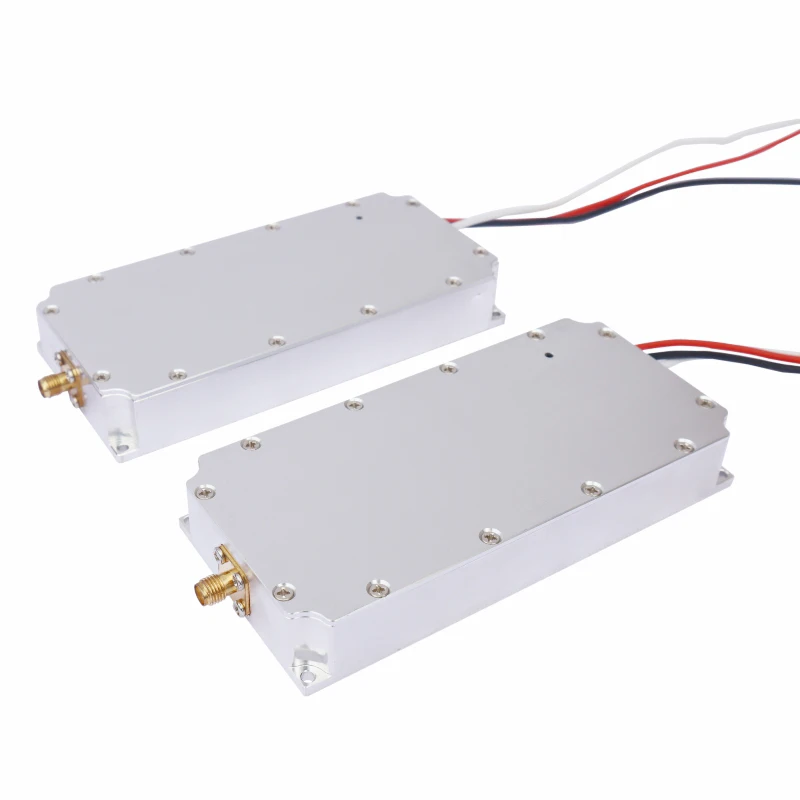
high-sensitivity detector

The contemporary security landscape demands equipment that can distinguish between normal environmental variations and genuine threats with remarkable accuracy. High-sensitivity detectors provide this critical capability by employing advanced sensor technologies and sophisticated signal processing algorithms. These systems can identify anomalies at levels previously considered undetectable, making them indispensable for protecting critical infrastructure, military installations, and high-value assets.

Organizations worldwide are recognizing that reactive security measures are insufficient in today's threat environment. Proactive detection capabilities have become essential for maintaining operational security and preventing costly incidents. The implementation of high-sensitivity detection systems represents a strategic investment in comprehensive security infrastructure that adapts to evolving risks and provides early warning capabilities that traditional systems cannot match.

Understanding High-Sensitivity Detection Technology

Core Principles of Enhanced Detection

High-sensitivity detection technology operates on the principle of amplifying and analyzing extremely weak signals that would typically be overlooked by standard surveillance equipment. These systems utilize advanced sensor arrays capable of detecting minute changes in electromagnetic fields, acoustic signatures, thermal patterns, and other environmental parameters. The technology incorporates multiple detection modalities simultaneously, creating a comprehensive monitoring network that provides superior situational awareness.

The fundamental advantage of a high-sensitivity detector lies in its ability to process signals at significantly lower thresholds than conventional systems. This enhanced capability enables the detection of threats at greater distances and earlier stages of development. Advanced signal processing algorithms filter out background noise while preserving critical threat indicators, ensuring that security personnel receive accurate and actionable intelligence.

Modern high-sensitivity systems integrate artificial intelligence and machine learning capabilities to continuously improve their detection accuracy. These intelligent systems learn from environmental patterns and threat signatures, adapting their sensitivity parameters to optimize performance in specific operational contexts. This adaptive functionality ensures that the detector maintains peak effectiveness even as environmental conditions and threat profiles evolve over time.

Technical Specifications and Capabilities

Professional-grade high-sensitivity detectors feature sophisticated hardware architectures designed to maximize signal-to-noise ratios and minimize false alarm rates. These systems typically incorporate multiple sensor types, including radiofrequency analyzers, infrared sensors, acoustic monitoring equipment, and specialized electromagnetic field detectors. The integration of diverse sensing technologies creates a multi-layered detection capability that provides comprehensive coverage across multiple threat vectors.

Advanced processing units within high-sensitivity detectors perform real-time analysis of incoming sensor data, applying complex algorithms to identify threat patterns and anomalies. These systems can process thousands of data points per second, enabling rapid threat identification and classification. The processing capabilities extend to pattern recognition, trajectory analysis, and behavioral profiling, providing security teams with detailed intelligence about detected threats.

Contemporary high-sensitivity detection systems feature modular designs that allow for customization based on specific operational requirements. Users can configure detection parameters, sensitivity thresholds, and alert protocols to match their unique security needs. This flexibility ensures that the system can adapt to various deployment scenarios while maintaining optimal performance characteristics.

Critical Applications in Modern Surveillance

Perimeter Security and Access Control

Perimeter security represents one of the most demanding applications for high-sensitivity detection technology. Traditional fence-line monitoring systems often struggle to differentiate between environmental disturbances and genuine intrusion attempts. A high-sensitivity detector addresses these limitations by providing precise threat localization and classification capabilities that dramatically reduce false alarm rates while maintaining exceptional detection reliability.

Advanced perimeter monitoring systems utilizing high-sensitivity detection technology can identify approaching threats at extended ranges, providing security teams with valuable response time. These systems monitor multiple parameters simultaneously, including ground vibrations, electromagnetic signatures, and thermal patterns, creating a comprehensive security envelope around protected facilities. The ability to detect subtle changes in the environment enables early identification of reconnaissance activities and other pre-incident indicators.

Integration with existing security infrastructure allows high-sensitivity detectors to enhance rather than replace current systems. These detectors can provide additional layers of protection while working in conjunction with cameras, access control systems, and security personnel. The enhanced detection capabilities significantly improve overall security effectiveness while reducing the workload on human operators through intelligent threat filtering and prioritization.

Drone and Aerial Threat Detection

The proliferation of unmanned aerial vehicles has created new security challenges that require specialized detection capabilities. Small drones and other aerial threats often operate below the detection thresholds of conventional radar and surveillance systems. High-sensitivity detectors specifically designed for aerial threat identification can detect these small targets at significant ranges, providing critical early warning capabilities for protected airspace.

Specialized high-sensitivity detector systems for drone detection utilize multiple sensing technologies to identify aerial threats across various operational scenarios. These systems can detect the electromagnetic signatures of drone control links, the acoustic signatures of propeller systems, and the visual signatures of moving objects against complex backgrounds. The multi-modal approach ensures reliable detection even when individual sensing methods face challenging conditions.

Advanced aerial threat detection systems provide comprehensive situational awareness through real-time tracking and classification capabilities. These systems can distinguish between authorized and unauthorized aircraft, track multiple targets simultaneously, and provide predictive analysis of flight paths and potential targets. The intelligence generated by these systems enables proactive security responses and coordinated countermeasures against aerial threats.

Operational Advantages and Performance Benefits

Enhanced Detection Range and Accuracy

The primary operational advantage of high-sensitivity detection systems lies in their superior range and accuracy compared to conventional surveillance equipment. These systems can identify threats at distances that provide security teams with extended response windows and improved tactical positioning. The enhanced detection range is particularly valuable in protecting large facilities, critical infrastructure, and sensitive operations where early threat identification is essential for effective response.

Accuracy improvements in high-sensitivity detection systems directly translate to reduced false alarm rates and improved operational efficiency. Security personnel can focus their attention on genuine threats rather than investigating numerous false alarms generated by less sophisticated systems. This improved accuracy also enhances the credibility and reliability of security alerts, ensuring that responses are appropriately prioritized and resourced.

The combination of extended range and improved accuracy creates a force multiplier effect for security operations. Fewer personnel can effectively monitor larger areas while maintaining higher levels of security coverage. This efficiency improvement reduces operational costs while potentially improving security effectiveness through more focused and responsive threat management.

Integration with Existing Security Infrastructure

Modern high-sensitivity detectors are designed to integrate seamlessly with existing security management systems and surveillance networks. These systems feature standard communication protocols and interface capabilities that allow them to share data with central monitoring stations, access control systems, and other security components. The integration capability ensures that high-sensitivity detection represents an enhancement rather than a replacement of current security infrastructure.

Advanced integration capabilities enable high-sensitivity detectors to trigger automated responses from other security systems. Detection events can automatically activate cameras, lighting systems, access control measures, and alert protocols based on predetermined response plans. This automated coordination improves response times and ensures consistent security procedures across different threat scenarios.

The networking capabilities of contemporary high-sensitivity detection systems support centralized monitoring and management across multiple locations. Security operations centers can monitor and control distributed detection assets from a single interface, providing coordinated security coverage for complex facilities or multiple sites. This centralized approach improves situational awareness while reducing the personnel requirements for effective security monitoring.

Industry-Specific Implementation Considerations

Critical Infrastructure Protection

Critical infrastructure facilities face unique security challenges that require specialized high-sensitivity detection capabilities. Power generation facilities, water treatment plants, transportation hubs, and telecommunications centers must maintain continuous operations while protecting against various threat types. High-sensitivity detectors designed for critical infrastructure applications provide the robust performance and reliability required for these demanding environments.

The implementation of high-sensitivity detection systems in critical infrastructure settings requires careful consideration of environmental factors and operational requirements. These facilities often operate in challenging conditions with significant electromagnetic interference, vibration, and other environmental factors that can affect detector performance. Specialized high-sensitivity systems designed for these environments incorporate advanced filtering and compensation technologies to maintain optimal performance under adverse conditions.

Regulatory compliance represents another important consideration for critical infrastructure applications. High-sensitivity detection systems must meet stringent performance standards and certification requirements while providing the documentation and reporting capabilities required by regulatory authorities. Modern systems include comprehensive logging and reporting functions that support compliance requirements while providing valuable operational intelligence.

Military and Defense Applications

Military and defense applications demand the highest levels of performance from high-sensitivity detection systems. These environments require equipment capable of operating under extreme conditions while providing reliable threat detection against sophisticated adversaries. Military-grade high-sensitivity detectors incorporate ruggedized designs, enhanced security features, and specialized capabilities that address the unique requirements of defense applications.

The deployment of high-sensitivity detectors in military settings requires consideration of operational security and electronic warfare concerns. These systems must provide effective detection capabilities while minimizing their own electromagnetic signatures and vulnerability to countermeasures. Advanced military detection systems incorporate anti-jamming technologies, secure communications, and other protective measures that ensure continued operation in contested environments.

Tactical mobility represents another important consideration for military applications. High-sensitivity detectors designed for military use often feature portable configurations that can be rapidly deployed and relocated as operational requirements change. These mobile systems maintain the sophisticated detection capabilities of fixed installations while providing the flexibility required for dynamic military operations.

Future Developments and Technology Trends

Artificial Intelligence and Machine Learning Integration

The integration of artificial intelligence and machine learning technologies represents the next major advancement in high-sensitivity detection systems. These technologies enable detectors to continuously learn from operational experience, improving their ability to distinguish between threats and benign activities. AI-enhanced systems can adapt to local environmental conditions, seasonal variations, and evolving threat patterns without requiring manual reconfiguration.

Machine learning algorithms applied to high-sensitivity detection can identify subtle patterns and correlations that would be impossible for human operators to recognize. These systems can process vast amounts of sensor data to identify emerging threat signatures and predict potential security incidents before they occur. The predictive capabilities of AI-enhanced detection systems represent a significant advancement in proactive security management.

Future developments in AI integration will likely include advanced behavioral analysis capabilities that can assess the intent and threat level of detected objects or individuals. These systems will provide security personnel with enhanced situational awareness and threat assessment capabilities, enabling more effective and appropriate responses to security incidents.

Enhanced Sensor Technology and Miniaturization

Ongoing developments in sensor technology are continuously improving the capabilities and reducing the size of high-sensitivity detection systems. Advanced materials and manufacturing techniques are enabling the production of sensors with enhanced sensitivity and broader spectral coverage while maintaining compact form factors. These improvements make it possible to deploy sophisticated detection capabilities in previously impractical locations and applications.

Miniaturization trends are enabling the development of distributed sensor networks that provide comprehensive coverage using numerous small detection nodes. These networks can provide detailed spatial information about threats while offering redundancy and resilience against individual sensor failures. The distributed approach also enables more cost-effective coverage of large areas compared to traditional centralized detection systems.

Future sensor developments will likely include enhanced multispectral capabilities that can simultaneously monitor multiple portions of the electromagnetic spectrum. These advanced sensors will provide more comprehensive threat signatures while maintaining the compact size and power efficiency required for practical deployment. The enhanced spectral coverage will improve detection capabilities against evolving threat technologies and countermeasures.

FAQ

What makes a high-sensitivity detector more effective than standard surveillance equipment?

A high-sensitivity detector provides superior performance through its ability to detect much weaker signals and smaller disturbances than conventional systems. These detectors utilize advanced sensor technologies and sophisticated signal processing to identify threats at greater distances and earlier stages. The enhanced sensitivity enables detection of subtle anomalies that would be missed by standard equipment, providing earlier warning and better situational awareness for security personnel.

How do high-sensitivity detectors reduce false alarms while maintaining detection effectiveness?

High-sensitivity detectors employ intelligent algorithms and multiple sensor modalities to distinguish between genuine threats and environmental disturbances. These systems analyze multiple parameters simultaneously and use pattern recognition to identify threat signatures while filtering out routine activities. The combination of enhanced sensitivity with sophisticated analysis capabilities allows these detectors to maintain high detection rates while dramatically reducing false alarm incidents.

Can high-sensitivity detectors be integrated with existing security systems?

Modern high-sensitivity detectors are specifically designed for seamless integration with existing security infrastructure. These systems feature standard communication protocols and interface capabilities that enable them to share data with surveillance cameras, access control systems, and security management platforms. The integration capability allows organizations to enhance their current security systems rather than requiring complete replacement of existing equipment.

What are the key factors to consider when selecting a high-sensitivity detector for specific applications?

Key selection factors include the specific threat types you need to detect, environmental conditions at the deployment site, integration requirements with existing systems, and regulatory compliance needs. Consider the detection range required, sensitivity levels needed, power consumption, and maintenance requirements. Additionally, evaluate the system's ability to adapt to your specific operational environment and its scalability for future expansion needs.