
A modern anti drone module does not operate in isolation—it functions as a central nervous system within an integrated physical security ecosystem. When it detects a drone breaching restricted airspace, it triggers coordinated responses across existing infrastructure: access control systems lock designated doors or gates to isolate exposed zones; CCTV cameras automatically slew and track the drone’s flight path, capturing forensically usable footage; and fire alarm systems can pre-activate smoke extraction or targeted sprinkler zones if the drone is assessed as carrying an incendiary payload. This isn’t static configuration—it’s dynamic, bidirectional communication. The module continuously exchanges status updates with subsystems, ensuring all actions remain coherent, synchronized, and context-aware. Without this real-time integration, response delays and fragmented threat assessment significantly degrade defense effectiveness.
Seamless integration with legacy infrastructure hinges on flexible interoperability—not wholesale replacement. Standard protocols like ONVIF (for IP cameras) and BACnet (for building management systems) provide foundational compatibility, while the anti drone module’s RESTful APIs enable secure, scalable event exchange with modern platforms. For older systems lacking native API support—such as analog CCTV matrices or fire alarm panels using proprietary serial interfaces—lightweight middleware agents translate commands between the module’s digital interface and legacy controllers. These agents handle protocol conversion for Wiegand and OSDP access control panels, among others. This layered approach allows organizations to extend the life of decades-old hardware while adding drone-specific detection and automated response capabilities—delivering enterprise-grade aerial security without capital-intensive rip-and-replace investments.
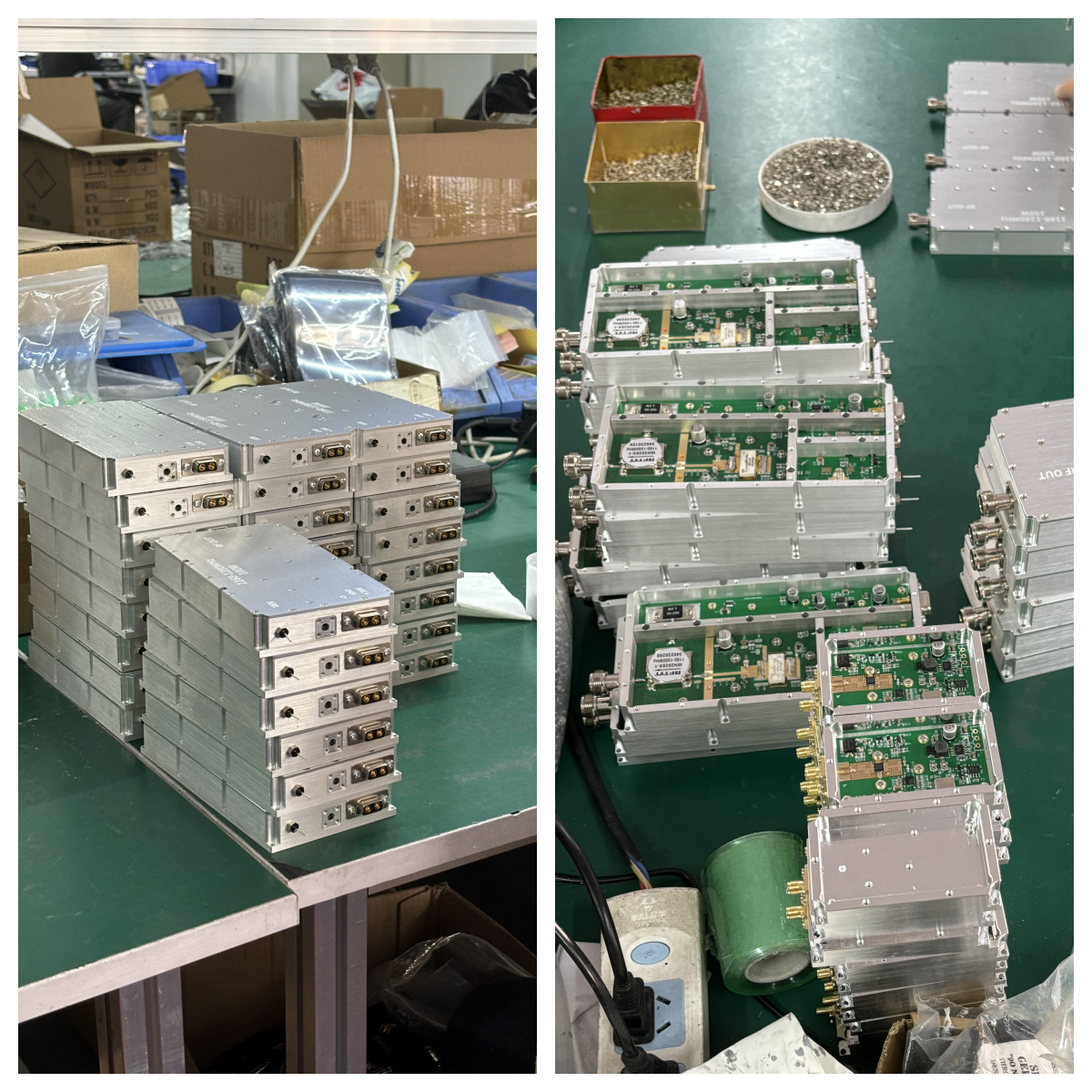
The anti drone module serves as an intelligent command hub by fusing inputs from radio frequency (RF), radar, and electro-optical/infrared (EO/IR) sensors into a single, actionable airspace model. Artificial intelligence filters environmental noise and sensor-specific artifacts—critical in urban or industrial settings where false positives undermine operational trust. Machine learning–driven correlation layers cross-validate RF signatures, radar returns, and thermal profiles to confirm threat identity with 99% accuracy, as validated in peer-reviewed sensor fusion research. Within seconds, the system delivers precise drone velocity, altitude, heading, and projected trajectory—transforming raw data into mission-critical situational awareness and enabling proactive, rather than reactive, defense.
Response latency is non-negotiable: sub-500ms detection-to-action performance is essential for neutralizing fast-moving threats before they reach critical assets. This speed directly mitigates financial exposure—studies estimate average organizational losses of $740,000 per minute of unmitigated drone intrusion (Ponemon Institute, 2023). To meet this benchmark, the module integrates tightly with perimeter defenses, triggering synchronized barrier deployment, alert escalation, and RF suppression without manual intervention. Policy-adjusted automation thresholds allow for human-out-of-the-loop execution in high-risk, time-sensitive scenarios—such as perimeter breaches—while preserving operator oversight for discretionary decisions. The result is a responsive, policy-enforced defense architecture that eliminates coordination lag and reduces vulnerability windows.
Once a threat is confirmed, the system moves beyond detection to orchestrate a sequence of coordinated, interoperable responses. Acting as an automation engine, the anti drone module executes physical and digital countermeasures in parallel—without requiring manual input at each step.
Upon confirmation of an unauthorized drone, the module initiates three synchronized actions: it sends immediate lock signals to designated access control points, securing ingress/egress routes; simultaneously escalates alerts to the central command center, mobile security teams, and connected fire alarm panels; and activates RF suppression to disrupt the drone’s control link—forcing landing or return-to-home behavior. These responses occur within seconds, forming a multilayered, self-coordinating defense. By eliminating sequential manual steps, automation reduces reaction time, minimizes human error, and ensures consistency across incidents—enhancing both speed and reliability.
A resilient multi-layer defense balances technical capability with operational pragmatism. At the detection layer, the anti drone module aggregates inputs from radar, RF scanners, and EO/IR cameras into a unified, bandwidth-efficient data stream—prioritizing relevant signal metadata over raw video feeds where possible. During identification, AI models classify threats in real time using spectral, kinematic, and behavioral signatures, cutting false alarms by up to 87% compared to single-sensor approaches. Mitigation actions—including RF jamming, alert routing, and physical lockdown—are triggered only when confidence thresholds and policy rules align, ensuring network resources are reserved for verified threats. Calibration to site-specific air traffic patterns and historical intrusion data further sharpens precision, maintaining rapid detection-to-response cycles without overloading infrastructure.
Striking the right balance between speed and accountability requires context-aware governance. Full automation delivers sub-second responses essential for intercepting fast-moving drones—particularly during perimeter breaches—but carries risk if applied indiscriminately. Human-in-the-loop oversight prevents unintended disruption of authorized UAV operations (e.g., emergency medical deliveries or infrastructure inspections) and avoids collateral impacts like false lockdowns. Industry best practice, endorsed by the Department of Homeland Security’s CISA guidelines, recommends a hybrid model: automate detection, classification, and low-risk alerts; require explicit human authorization for high-consequence actions—including RF suppression in shared airspace or kinetic interception. This preserves legal compliance, operational safety, and stakeholder trust—ensuring the anti drone module enhances, rather than compromises, overall security posture.
Its primary role is to detect unauthorized drones and orchestrate integrated responses, including access control lockdowns, CCTV tracking, and RF suppression, within a broader physical security framework.
It relies on interoperability standards like ONVIF and BACnet, along with middleware agents that enable communication with older analog systems, ensuring compatibility without the need for major hardware replacements.
The module combines RF, radar, and EO/IR sensor data, utilizing AI and sensor fusion techniques to ensure accurate and real-time threat detection and identification.
Quick response times (sub-500ms) are crucial to neutralizing threats before they can cause harm, saving organizations from potential financial and operational losses.
Full automation executes responses without manual intervention, ideal for high-speed scenarios, while human-in-the-loop systems involve operator oversight for high-consequence decisions, balancing speed with accountability.

Shenzhen Longyuan Technology provides intelligent counter-drone systems for airports, stadiums & critical infrastructure. Real-time RF detection, tracking, and jamming with high-gain antennas and custom solutions. Trusted by global security teams.
Building A,Kaishangde Industrial Park,No. 1 Xinghua Road, Pingdi Sub-district, Longgang District, Shenzhen City
Copyright © 2026 Shenzhen Longyuan Technology Co., Ltd. All rights reserved. Privacy Policy
 EN
EN


 Hot News