
Effective reconnaissance drone detection demands multi-sensor fusion—correlating data from radar, RF scanners, electro-optical/infrared (EO/IR) cameras, and acoustic sensors to create a unified, real-time tracking solution. This integration minimizes false alarms by cross-validating target signatures: radar detects motion and range, RF identifies communication links, EO/IR provides visual and thermal confirmation, and acoustic sensors isolate rotor-specific noise patterns. For instance, while radar may detect an object moving at 60 kph, its small size alone cannot distinguish between a drone and a bird. Simultaneous RF detection of drone-specific frequencies (e.g., 2.4 GHz or 5.8 GHz) and acoustic matching of propeller harmonics raises confirmation accuracy above 95%. Crucially, this redundancy ensures continuity when one sensor is degraded—EO/IR remains effective in darkness, while acoustic arrays retain utility in fog where optical systems falter.
Each sensor modality addresses distinct operational gaps. Radar achieves long-range detection—up to 7.5 km for Class 1 drones—but struggles with slow-moving or low-altitude targets. RF sensors identify controller signals within ~3 km but require line-of-sight and are ineffective against fully autonomous drones. EO/IR cameras deliver visual identification and thermal discrimination up to 2 km, while acoustic arrays cover ~1 km and excel in cluttered, GPS-denied, or visually obscured environments. Fusing these inputs reduces false positives to under 0.1%, compared to ~12% for standalone radar systems. Advanced fusion algorithms—including adaptive Kalman filters and AI-driven weighting—dynamically prioritize sensor inputs based on context: during heavy rain, the system de-emphasizes EO/IR and relies more heavily on radar and RF. As validated in U.S. Army ERDC field trials, such adaptive fusion sustains 99.5% system uptime across electromagnetic interference and adverse weather conditions.
Multi-sensor systems exploit unique physical and behavioral signatures to separate drones from benign clutter. Radar micro-Doppler analysis resolves propeller rotation frequencies—quadcopters typically generate 200–600 Hz harmonics, whereas birds produce broadband flapping signatures below 20 Hz. RF detection identifies protocol-specific behaviors, such as DJI™’s frequency-hopping sequences or military-grade encrypted telemetry. Acoustic recognition isolates blade-pass frequencies and spectral envelopes, distinguishing Phantom-class harmonics from overlapping urban noise or wind gusts. Neural networks trained on datasets from the NATO STO-TR-HFM-298 benchmark continuously refine classification against evolving threats—including bird flocks, weather balloons, and airborne debris. In urban deployments where birds trigger 65% of raw radar alerts, fusion logic automatically discards targets lacking concurrent RF telemetry or digital command structure. With continuous learning, new drone models are recognized and classified within 72 hours of first exposure—without requiring manual model retraining.
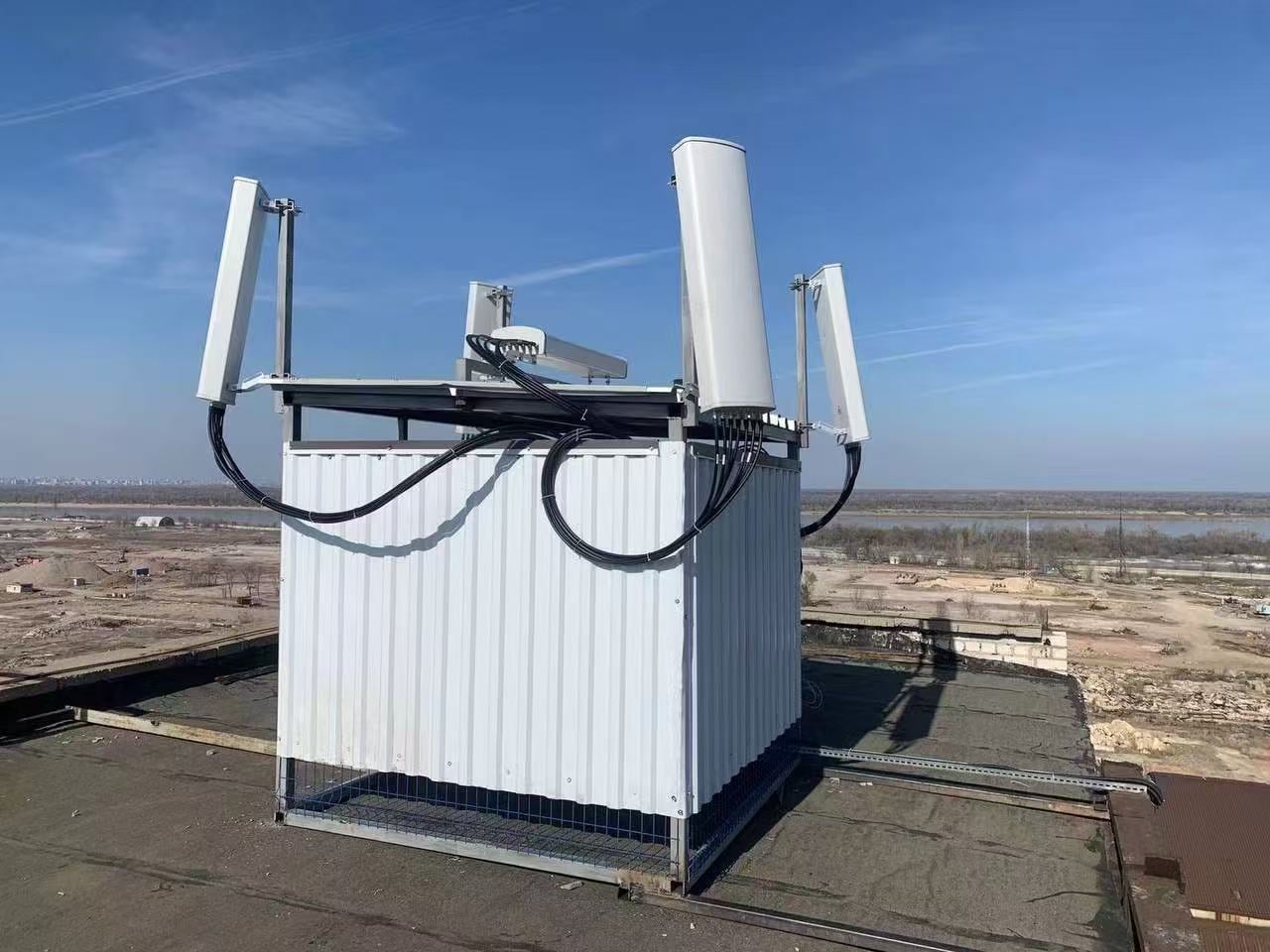
Military anti-drone systems deploy AI models directly on edge hardware—such as NVIDIA Jetson AGX Orin or Xilinx Versal ACAP platforms—to process fused sensor data locally. This eliminates cloud latency and ensures sub-second decision cycles (<300 ms end-to-end), critical when confronting FPV or swarm-based threats. The AI ingests synchronized inputs from radar, RF, EO/IR, and acoustic sensors to classify objects by kinematic profile, size, thermal signature, and RF fingerprint—differentiating hobbyist quadcopters from fixed-wing surveillance platforms or migratory birds. Behavioral analytics flag high-risk maneuvers—loitering near restricted airspace, sudden altitude changes, or coordinated swarm formation—and assign a calibrated threat confidence score. Continuous online learning adapts the model in real time to newly observed drone variants, incorporating feedback from operator overrides and post-mission forensic analysis. Field testing under U.S. SOCOM’s Project Convergence 2023 confirmed that edge-AI classification reduced operator cognitive load by 70% and cut engagement latency by 4.2× versus legacy rule-based systems.
Beyond physical classification, AI performs deep, protocol-aware analysis of command-and-control (C2) traffic—including Wi-Fi, LTE/5G, and proprietary radio protocols like OcuSync or Lightbridge. Using lightweight packet dissection engines running on embedded FPGA co-processors, the system decodes handshake timing, payload structure, and modulation behavior in real time. It correlates findings against authoritative threat libraries maintained by the National Cybersecurity Center of Excellence (NCCoE) and open-source repositories like DroneDB. This enables precise attribution: distinguishing friendly test flights from adversarial reconnaissance based on encryption keys, session duration, and control-channel entropy. The system also flags anti-jamming behaviors—frequency hopping, spread-spectrum transmission, or beacon suppression—which correlate strongly with hostile intent per DoD Directive 3000.09. Protocol telemetry feeds directly into the threat scoring engine, elevating confidence for drones exhibiting video streaming + encrypted C2 + geofence override—signature indicators of malicious payloads. This layer reduces dependence on manual spectrum monitoring and enables fully automated, legally defensible identification aligned with DoD’s Electronic Warfare Execution Policy (EWP).
Layered defense integrates soft-kill and hard-kill countermeasures to match threat type, environment, and mission priority—ensuring physically appropriate neutralization without compromising operational safety or legal compliance.
Commanders must align mitigation strategy with terrain, population density, and electromagnetic (EM) constraints:
A tiered response framework—endorsed by RAND Corporation’s 2024 report Countering Autonomous Aerial Threats—recommends soft-kill as the primary intercept layer, reserving kinetic options for hardened, high-value assets or scenarios where soft-kill fails (e.g., FPV drones operating on analog video links immune to digital jamming). Effective deployment requires EM environmental mapping integrated into the C2 platform—identifying congested bands used by emergency services or air traffic control to avoid disruptive interference while pinpointing exploitable windows for electronic countermeasures.
Military anti-drone technology hinges on a centralized, interoperable command and control (C2) backbone—designed to unify detection, tracking, and neutralization across heterogeneous systems. Built on standards-compliant architectures (MOSA, STANAG 4586, and IEEE 1394.2), modern C2 platforms ingest and time-align sensor feeds from radar, RF, EO/IR, and acoustic arrays, generating a single, authoritative air picture. Operators gain real-time situational awareness, dynamic threat prioritization, and automated countermeasure assignment—selecting soft-kill for low-risk intruders or escalating to kinetic options when warranted by behavior or asset value. By orchestrating layered defenses through one interface, the system eliminates functional silos and prevents conflicting engagements (e.g., jamming while simultaneously spoofing GNSS). As demonstrated in Joint All-Domain Command and Control (JADC2) exercises, integrated C2 reduces mean time-to-engagement from 12 seconds to under 2.5 seconds—and maintains full functionality even when up to two sensor modalities are degraded. The result is a resilient, adaptive, and human-supervised defense network capable of evolving alongside next-generation aerial threats.
Multi-sensor fusion combines data from different sensors like radar, RF, EO/IR, and acoustic systems to provide a unified and reliable real-time tracking solution for drones. This reduces false positives and enhances accuracy.
AI-driven identification efficiently analyzes drone behavior, size, kinematics, and command protocols to classify and prioritize threats. It reduces operator workload and enhances quick decision-making.
Soft-kill countermeasures involve non-physical disruption like RF jamming or GNSS spoofing, while hard-kill methods use kinetic solutions such as interceptor drones or directed-energy weapons to physically neutralize a drone.
Layered defenses prioritize soft-kill solutions to avoid physical risks and reserve hard-kill countermeasures for high-value assets or scenarios requiring definitive neutralization.
Integrated command and control systems unify detection, tracking, and neutralization across varying sensors, ensuring faster, coordinated responses with minimized errors.

Shenzhen Longyuan Technology provides intelligent counter-drone systems for airports, stadiums & critical infrastructure. Real-time RF detection, tracking, and jamming with high-gain antennas and custom solutions. Trusted by global security teams.
Building A,Kaishangde Industrial Park,No. 1 Xinghua Road, Pingdi Sub-district, Longgang District, Shenzhen City
Copyright © 2026 Shenzhen Longyuan Technology Co., Ltd. All rights reserved. Privacy Policy
 EN
EN


 Hot News