
Unauthorized drones rely almost entirely on Global Navigation Satellite Systems (GNSS)—including GPS, GLONASS, and Galileo—for positioning, altitude hold, and autonomous navigation. A drone GPS jammer exploits this dependency by transmitting high-power radio noise precisely within GNSS frequency bands (primarily 1.227 GHz and 1.575 GHz), overpowering faint satellite signals received by the drone’s onboard receiver. This prevents accurate coordinate calculation and triggers immediate operational failure:
This method is especially effective against off-the-shelf drones with minimal redundancy—neutralizing threats across ranges of 100–500 meters, depending on jammer output, antenna design, and environmental conditions such as urban clutter or terrain shielding.
Today’s advanced drones incorporate defensive features—including frequency-hopping spread spectrum (FHSS), encrypted control links, and multi-constellation GNSS receivers—to resist static jamming. To counter these, next-generation drone GPS jammers integrate real-time spectrum analysis and adaptive signal processing. Within milliseconds of detecting a drone’s transmission signature, they deploy coordinated interference across:
This agility prevents fallback to inertial navigation or visual odometry during short-duration outages—and denies drones time to initiate backup protocols. As Ponemon Institute observed in its 2023 UAS Security Assessment, “93% of commercial drones revert to manual mode when GNSS fails,” creating a critical window for operator disorientation and physical interdiction. Effectiveness thus hinges not on brute-force broadcasting, but on intelligent, context-aware signal suppression.
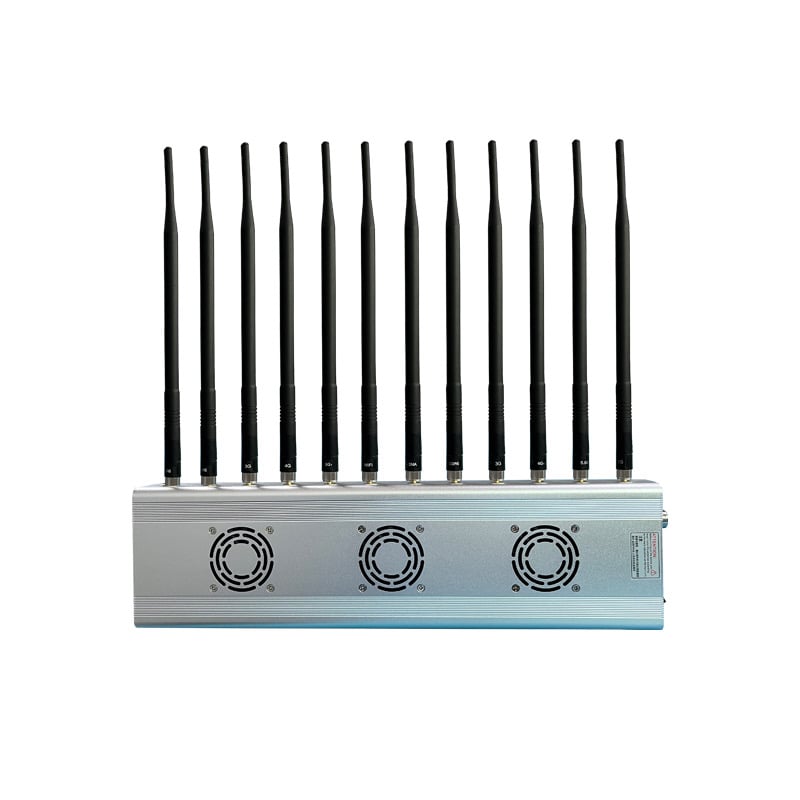
Power generation plants, water treatment facilities, and data centers face growing risks from drone-based surveillance and malicious payload delivery. In such environments, a drone GPS jammer offers a precise, non-kinetic means to disrupt unauthorized flight before reconnaissance or deployment occurs. By cutting GNSS reception, it forces drones into fail-safe behaviors—landing on-site or returning to origin—without triggering alarms or risking physical damage. When deployed with directional antennas and power calibration, jamming can be confined to facility perimeters, minimizing spillover to adjacent infrastructure or public GNSS users.
Airports depend on uninterrupted GPS for precision approach systems like WAAS and GBAS; even brief GNSS degradation poses serious safety hazards. Similarly, government compounds and high-profile events attract drones used for illicit surveillance or weaponized payloads. A drone GPS jammer creates a temporary, localized no-fly zone by denying positional awareness—causing drones to lose orientation, abandon missions, or exit protected airspace. Unlike kinetic interceptors, it avoids debris hazards and legal complications tied to airspace sovereignty, making it suitable for dense urban deployments where safety and regulatory compliance are paramount.
Civilian use of drone GPS jammers is illegal in virtually all jurisdictions. In the United States, the Federal Communications Commission (FCC) explicitly prohibits intentional interference with authorized radio communications under Section 333 of the Communications Act—enforcing fines exceeding $100,000 per violation. The International Telecommunication Union (ITU) classifies GNSS jamming as unlawful spectrum manipulation, and national regulators—including Ofcom (UK), BNetzA (Germany), and ACMA (Australia)—enforce equivalent bans. Exceptions exist only for authorized entities: military operations, law enforcement agencies operating under judicial oversight, or critical infrastructure operators granted explicit spectrum licenses by national authorities.
Drone GPS jammers generate uncontrolled RF fields that can impair vital systems beyond their intended target. Aircraft relying on GPS-dependent navigation aids—including ADS-B transponders and RNP approaches—are vulnerable to signal degradation. First responders using GNSS-timed radios or hospital telemetry systems may experience timing failures or location inaccuracies. A documented 2023 incident at a Guizhou logistics hub disrupted regional air traffic management for over 90 minutes, resulting in $740,000 in verified aviation-related losses. Ponemon Institute’s 2023 UAS Risk Report confirms that collateral disruption remains the leading liability driver for unauthorized jamming—exposing operators to negligence claims, regulatory penalties, and third-party litigation when non-targeted systems suffer downtime or safety incidents.
Selecting a drone GPS jammer requires alignment with threat profile, environment, and legal authority. Its core strength lies in rapid, non-kinetic neutralization of GNSS-dependent drones—triggering safe landings or RTH without physical risk. This makes it especially appropriate for static, high-value sites where projectile-based systems pose unacceptable collateral or reputational risk. However, effectiveness diminishes against drones equipped with robust inertial measurement units (IMUs), AI-powered visual odometry, or multi-sensor fusion architectures—unless paired with complementary detection and RF-spoofing layers.
| Counter‑UAS measure | Action type | Key use case | Limitations |
|---|---|---|---|
| Drone GPS jammer | Non‑kinetic, soft‑kill | Disabling autonomous drones reliant on GNSS waypoints and positioning | Ineffective against IMU/visual-navigation drones; strictly regulated for civilian use |
| RF jammer | Non‑kinetic | Severing pilot-to-drone control link | Fails against fully autonomous drones; subject to same legal restrictions |
| Kinetic interceptor | Hard‑kill | Physical destruction when soft-kill fails | Debris hazard; airspace violation risk; high acquisition and operational cost |
| Detection‑only system | Passive | Early warning and identification via RF, radar, or RF fingerprinting | Provides no mitigation—requires integration with response layers |
A resilient counter-UAS strategy prioritizes layered defense: combining persistent detection, real-time tracking, and graduated response options—including legally authorized jamming where permitted. Jammers retain strategic value in controlled, licensed applications—but their deployment must follow rigorous legal review, technical validation, and strict adherence to operational boundaries.
A drone GPS jammer is a device that disrupts the navigation of unauthorized drones by interfering with their GNSS signals such as GPS, GLONASS, and Galileo. It causes the drone to lose positional accuracy and perform fail-safe actions like landing or returning to its origin.
Drones that rely heavily on GNSS for positioning and navigation are significantly affected. Consumer and prosumer drones, which lack redundancy or advanced navigation systems, are most vulnerable.
Civilian use of GPS jammers is illegal in most jurisdictions. Organizations like the FCC and ITU prohibit unauthorized interference with radio communications, and violators can face heavy fines and legal repercussions.
Risks include collateral impacts on essential systems like aviation navigation, emergency response communications, and systems dependent on GNSS timing. Jamming can result in safety challenges, regulatory penalties, and financial liabilities if misused.
GPS jammers are a non-kinetic, soft-kill technology aimed at disrupting GNSS-dependent drones. In contrast, alternatives like RF jammers sever remote communication links, while kinetic interceptors physically destroy drones. Detection-only systems primarily provide early warning without active mitigation.

Shenzhen Longyuan Technology provides intelligent counter-drone systems for airports, stadiums & critical infrastructure. Real-time RF detection, tracking, and jamming with high-gain antennas and custom solutions. Trusted by global security teams.
Building A,Kaishangde Industrial Park,No. 1 Xinghua Road, Pingdi Sub-district, Longgang District, Shenzhen City
Copyright © 2026 Shenzhen Longyuan Technology Co., Ltd. All rights reserved. Privacy Policy
 EN
EN


 Hot News