
Modern airspace security faces unprecedented challenges as unmanned aerial vehicles become increasingly sophisticated and accessible. The proliferation of drones across commercial, recreational, and potentially malicious applications has created urgent demands for effective countermeasures. Organizations worldwide are recognizing that traditional air traffic control methods are insufficient for managing the complexities of contemporary drone operations, particularly when unauthorized or hostile aircraft enter restricted zones.
The emergence of drone jamming technology represents a critical advancement in maintaining secure airspace boundaries and protecting sensitive infrastructure. This sophisticated countermeasure capability enables security professionals to neutralize unauthorized drone activities through targeted signal interference, effectively disrupting communication links between operators and their aircraft. As regulatory frameworks continue evolving to address drone-related security concerns, understanding the fundamental principles and applications of jamming systems becomes essential for aerospace security professionals.
Contemporary security challenges demand comprehensive solutions that balance operational flexibility with protective capabilities. The integration of advanced jamming systems into existing security protocols provides organizations with reliable methods for preventing unauthorized surveillance, protecting critical infrastructure, and maintaining operational security across diverse environments. These systems offer scalable protection mechanisms that adapt to varying threat levels while preserving legitimate airspace activities.
Commercial and recreational drones rely heavily on radio frequency communications for navigation, control, and data transmission. These communication channels typically operate within specific frequency bands, including 2.4 GHz and 5.8 GHz ranges commonly used for consumer electronics. The dependency on these standardized frequencies creates inherent vulnerabilities that drone jamming technology can exploit to disrupt unauthorized operations effectively.
Understanding frequency allocation patterns helps security professionals identify optimal intervention points for neutralizing drone threats. Most consumer-grade drones utilize predictable communication protocols, making them susceptible to targeted interference when necessary. Professional-grade systems often incorporate frequency-hopping capabilities, but even these advanced platforms maintain vulnerabilities that sophisticated jamming solutions can address through adaptive countermeasures.
The standardization of drone communication protocols, while beneficial for interoperability, creates systematic weaknesses that security systems can leverage. These vulnerabilities extend beyond basic control channels to include GPS navigation signals, video transmission links, and telemetry data streams. Comprehensive jamming solutions target multiple communication vectors simultaneously, ensuring effective neutralization regardless of drone sophistication levels.
Global Positioning System signals form the backbone of modern drone navigation capabilities, enabling autonomous flight operations and precision positioning. However, GPS signals are inherently weak by the time they reach Earth's surface, making them particularly susceptible to interference from properly deployed jamming systems. This vulnerability represents a critical control point for security applications.
Drone jamming technology targeting GPS frequencies can effectively disrupt autonomous navigation capabilities, forcing aircraft into failsafe modes or manual control requirements. Many commercial drones are programmed to return to their launch point or land immediately when GPS signals become unavailable, providing predictable response patterns that security professionals can utilize for threat mitigation.
The widespread adoption of GPS-dependent navigation systems across drone platforms creates universal vulnerability points that jamming solutions can exploit consistently. Even military-grade drones often rely on civilian GPS signals for basic navigation, though they may incorporate additional guidance systems for enhanced resilience. Understanding these dependencies enables security teams to develop comprehensive countermeasure strategies.

Aviation facilities represent high-priority targets for drone jamming technology deployment due to the severe safety risks posed by unauthorized aircraft in airport environments. Commercial aviation operations require absolute airspace control within designated zones, and even small drones can cause significant disruptions to flight schedules or pose collision hazards to manned aircraft.
Modern airports implement layered security approaches that integrate jamming capabilities with radar detection and visual identification systems. This comprehensive methodology enables security personnel to identify potential threats early and deploy appropriate countermeasures before unauthorized drones can impact operations. The effectiveness of these integrated systems has proven essential for maintaining operational continuity in busy airspace environments.
Regulatory compliance requirements mandate that airport security systems balance threat neutralization with minimal interference to legitimate communications. Advanced jamming solutions incorporate directional capabilities and frequency-selective operations to ensure that countermeasures target only unauthorized aircraft while preserving essential aviation communications and navigation systems.
Government installations and military facilities face unique security challenges from drone-based surveillance and potential attack vectors. These facilities require robust drone jamming technology capable of providing comprehensive perimeter protection against sophisticated threats while maintaining operational security protocols.
Military applications often require jamming systems capable of addressing advanced drone platforms equipped with encryption, frequency-hopping capabilities, and autonomous operation modes. These enhanced threat profiles demand correspondingly sophisticated countermeasure capabilities that can adapt to evolving attack methodologies and maintain effectiveness against state-of-the-art adversary systems.
The integration of jamming technology with existing military defense systems creates force multiplication effects that enhance overall security capabilities. These integrated approaches enable coordinated responses to complex threats while maintaining compatibility with established command and control protocols. Effective implementation requires careful coordination between electronic warfare specialists and traditional security personnel.
Effective drone jamming technology deployment requires careful consideration of coverage areas, power requirements, and integration capabilities with existing security infrastructure. Professional installations typically incorporate multiple jamming nodes to ensure comprehensive coverage while avoiding dead zones where unauthorized drones might operate undetected.
Network-based approaches enable centralized control and coordination of distributed jamming assets, providing security teams with unified command capabilities and real-time threat response coordination. These networked systems can automatically adjust coverage patterns based on detected threats, optimizing resource allocation and maintaining operational flexibility across dynamic security environments.
Power management considerations play crucial roles in system design, particularly for portable or temporary installations. Battery-operated systems provide deployment flexibility but require careful capacity planning to ensure continuous operation during extended security events. Permanent installations benefit from integrated power systems that provide reliable operation with backup capabilities for critical applications.
Professional drone jamming technology implementations must address potential interference with legitimate communications systems operating in similar frequency ranges. Careful frequency coordination ensures that countermeasure operations do not disrupt essential services such as emergency communications, WiFi networks, or cellular telephone systems.
Advanced jamming systems incorporate frequency-selective capabilities that enable precise targeting of drone communication channels while preserving other radio services. These selective approaches require sophisticated signal processing capabilities and real-time spectrum analysis to identify appropriate intervention points and minimize collateral interference effects.
Regulatory compliance requirements vary significantly across jurisdictions, with many countries imposing strict controls on jamming device operation and deployment. Security professionals must understand applicable regulations and obtain necessary authorizations before implementing countermeasure systems, ensuring legal compliance while maintaining operational effectiveness.
The effectiveness of drone jamming technology depends heavily on transmission power levels, antenna configurations, and environmental factors that influence signal propagation. Professional-grade systems typically provide effective ranges from several hundred meters to multiple kilometers, depending on specific application requirements and regulatory constraints.
Terrain characteristics significantly impact jamming effectiveness, with obstacles such as buildings, hills, or vegetation creating shadow zones where signal strength may be insufficient for reliable drone neutralization. Site surveys and coverage modeling help security professionals optimize system placement and ensure comprehensive protection across designated areas.
Multi-directional antenna arrays provide omnidirectional coverage capabilities while maintaining focused power distribution for maximum effectiveness. Phased array systems offer enhanced directional control, enabling security teams to concentrate jamming energy toward specific threat vectors while minimizing interference in other directions.
Modern drone jamming technology systems achieve near-instantaneous response times when integrated with automated threat detection capabilities. Rapid deployment ensures that unauthorized drones are neutralized before they can complete surveillance missions or reach critical infrastructure targets, maintaining security effectiveness across time-sensitive scenarios.
Performance metrics for jamming effectiveness include neutralization success rates, false positive occurrences, and operational uptime statistics. Professional installations typically achieve neutralization success rates exceeding 95% against conventional drone platforms, with reduced effectiveness against military-grade or specially hardened systems.
Continuous monitoring capabilities enable security teams to assess jamming effectiveness in real-time and adjust system parameters as necessary to maintain optimal performance. These monitoring systems provide valuable feedback for system optimization and help identify potential countermeasure vulnerabilities that adversaries might exploit.
The deployment of drone jamming technology is subject to strict regulatory oversight in most jurisdictions, requiring specific authorizations from telecommunications authorities before installation or operation. These requirements ensure that countermeasure systems do not interfere with essential communications infrastructure or violate spectrum allocation regulations.
Licensing procedures typically involve detailed technical documentation, interference analysis, and coordination with other spectrum users in the deployment area. Security professionals must work closely with regulatory authorities to ensure compliance while maintaining operational security requirements for sensitive installations.
International coordination becomes necessary for installations near national borders or in areas with significant cross-border communications traffic. Regulatory frameworks continue evolving as authorities adapt to emerging drone threats and develop appropriate countermeasure guidelines that balance security needs with communications infrastructure protection.
Organizations deploying drone jamming technology must consider potential liability issues related to interference with legitimate drone operations or communications systems. Insurance considerations and risk assessment protocols help organizations understand exposure levels and implement appropriate protective measures.
Documentation requirements for jamming system operations provide essential evidence for liability protection and regulatory compliance demonstration. Detailed operational logs, maintenance records, and incident reports support legal compliance efforts while providing valuable data for system optimization and performance improvement.
Emergency procedures and fail-safe mechanisms ensure that jamming operations can be immediately discontinued if interference with critical systems is detected. These safety protocols protect organizations from liability while maintaining the ability to respond effectively to legitimate drone threats when they occur.
The integration of artificial intelligence capabilities into drone jamming technology promises significant enhancements in threat identification, response coordination, and system optimization. Machine learning algorithms enable systems to distinguish between authorized and unauthorized drone activities automatically, reducing false positive responses while maintaining security effectiveness.
Predictive analysis capabilities allow security systems to anticipate drone threat patterns based on historical data and environmental factors. These predictive capabilities enable proactive countermeasure deployment and resource allocation, improving overall security posture while reducing operational costs and system wear.
Adaptive countermeasure strategies powered by AI enable jamming systems to adjust their approach based on observed drone behavior and communication patterns. This adaptability ensures continued effectiveness against evolving drone technologies and countermeasure evasion techniques that adversaries might develop.
Future drone jamming technology developments emphasize integration with comprehensive security management platforms that coordinate multiple threat detection and response capabilities. These integrated approaches provide security professionals with unified situational awareness and coordinated response capabilities across diverse threat vectors.
Interoperability standards enable jamming systems to communicate effectively with radar networks, camera systems, and other security infrastructure components. This interoperability ensures that countermeasure deployments are coordinated with broader security operations and that response efforts are optimized for maximum effectiveness.
Cloud-based management platforms enable centralized control and coordination of distributed jamming assets across multiple facilities or geographic locations. These centralized approaches provide organizational security teams with comprehensive oversight capabilities while enabling rapid response coordination during multi-site security events.
Modern drone jamming technology systems incorporate frequency-selective and directional capabilities that minimize interference with authorized drone operations. Professional installations typically coordinate with legitimate operators to establish communication protocols and identification systems that prevent accidental jamming of authorized aircraft. Advanced systems can distinguish between authorized and unauthorized drones through various identification methods, ensuring that countermeasures target only genuine threats while preserving legitimate airspace activities.
Professional drone jamming technology systems typically provide effective ranges from 500 meters to several kilometers, depending on transmission power levels, antenna configurations, and regulatory constraints. Portable systems generally offer shorter ranges suitable for tactical applications, while permanent installations can provide comprehensive coverage across larger areas. Environmental factors such as terrain, weather conditions, and electromagnetic interference significantly impact actual performance ranges, requiring careful site planning and coverage analysis during system design.
The deployment of drone jamming technology is subject to strict regulatory oversight in most countries, typically requiring specific authorization from telecommunications authorities before installation or operation. Private organizations must obtain appropriate licenses and demonstrate that their systems will not interfere with essential communications infrastructure or legitimate drone operations. Legal requirements vary significantly between jurisdictions, and organizations should consult with regulatory authorities and legal experts before implementing countermeasure systems to ensure full compliance with applicable laws and regulations.
Advanced drone jamming technology systems integrated with automated threat detection capabilities can respond to identified drone threats within seconds of detection. Response time depends on system configuration, threat identification protocols, and integration with detection sensors such as radar or RF analyzers. Automated systems eliminate human reaction delays and enable immediate countermeasure deployment, while manual systems may require several seconds or minutes for operator assessment and response authorization, depending on established security procedures and threat evaluation protocols.

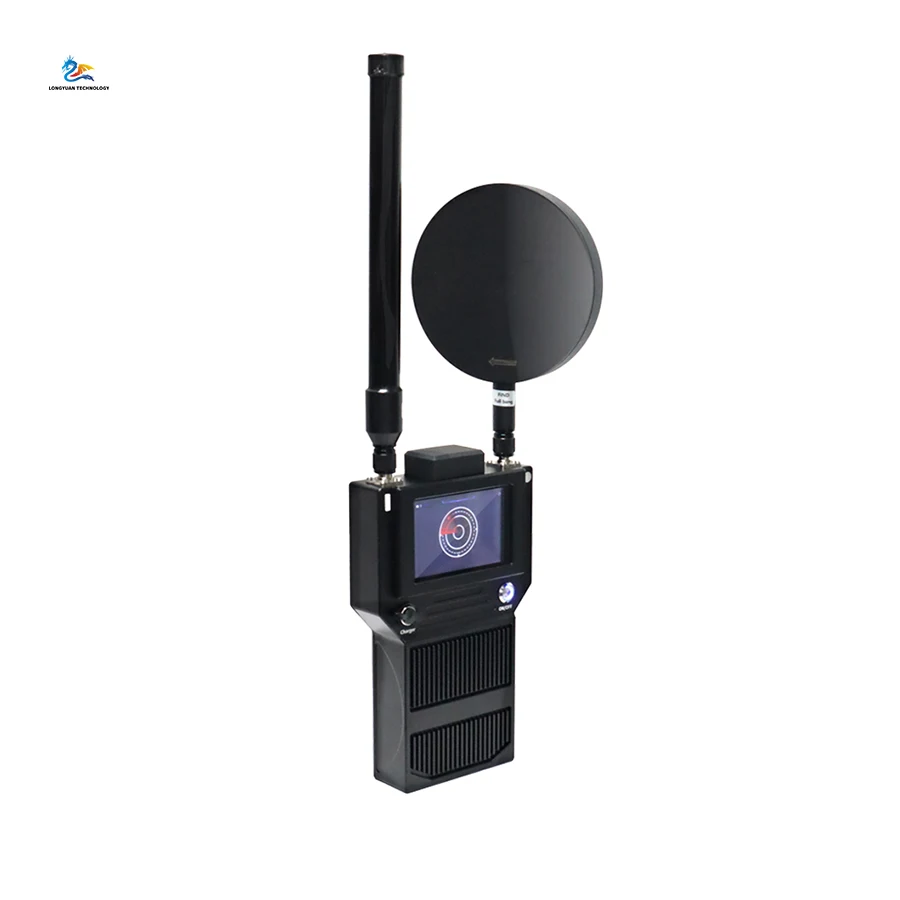
Shenzhen Longyuan Technology provides intelligent counter-drone systems for airports, stadiums & critical infrastructure. Real-time RF detection, tracking, and jamming with high-gain antennas and custom solutions. Trusted by global security teams.
Building A,Kaishangde Industrial Park,No. 1 Xinghua Road, Pingdi Sub-district, Longgang District, Shenzhen City
Copyright © 2026 Shenzhen Longyuan Technology Co., Ltd. All rights reserved. Privacy Policy
 EN
EN


 Hot News