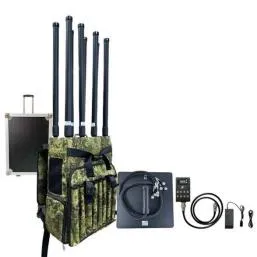
Small Directional Antenna: High-Performance Compact Solution for Focused Signal Communication

All Categories

Get a Free Quote

Our representative will contact you soon.
Email
Name
Company Name
Message
0/1000

small directional antenna

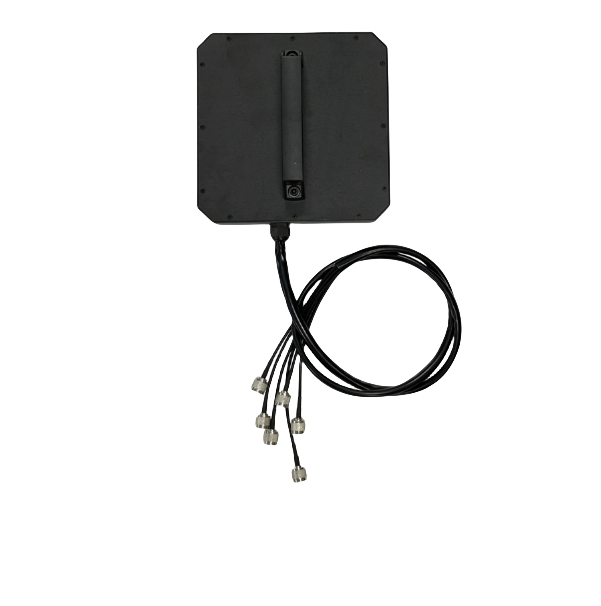
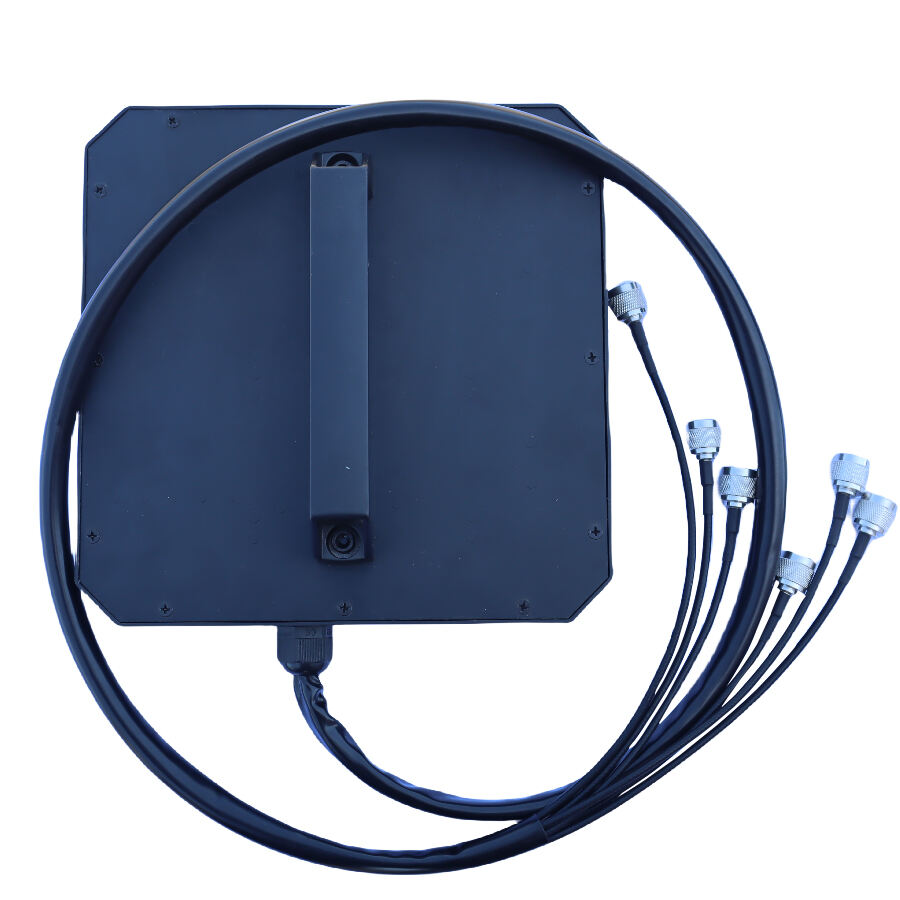
A small directional antenna represents a compact yet powerful solution in modern telecommunications, designed to focus radio frequency signals in specific directions for optimal communication efficiency. This sophisticated device typically measures between 4 to 12 inches in length, making it ideal for various applications where space is limited. The antenna's directional properties are achieved through careful engineering of its elements, including the reflector, driven element, and directors, which work in harmony to create a focused beam pattern. The design enables enhanced signal strength in the intended direction while minimizing interference from unwanted sources. These antennas operate across multiple frequency bands, commonly ranging from 2.4 GHz to 5.8 GHz, making them versatile for different communication needs. The construction typically involves durable, weather-resistant materials such as aluminum or reinforced plastic, ensuring longevity and consistent performance in various environmental conditions. Modern small directional antennas often incorporate advanced features like polarization diversity and gain adjustment capabilities, allowing users to fine-tune their signal reception and transmission characteristics for optimal performance in specific applications.
New Product Recommendations

Small directional antennas offer numerous compelling advantages that make them an excellent choice for both professional and consumer applications. Their compact size allows for discrete installation in various locations, making them ideal for both urban and rural settings where aesthetic considerations are important. The focused beam pattern significantly improves signal quality by reducing multipath interference and increasing the signal-to-noise ratio, resulting in clearer, more reliable communications. These antennas excel in long-distance point-to-point communications, achieving impressive range despite their small form factor. The energy efficiency is notable, as the directional nature means less power is wasted broadcasting in unwanted directions. Installation and maintenance are straightforward, with most models featuring simple mounting systems and requiring minimal adjustment once properly aligned. The durability of modern small directional antennas ensures a long service life, often exceeding 5-10 years with proper care. They demonstrate excellent performance in challenging weather conditions, maintaining signal integrity during rain, snow, or high winds. The versatility of these antennas extends to multiple applications, from WiFi extension to amateur radio communications and security system installations. Cost-effectiveness is another key advantage, as their efficient design often eliminates the need for signal amplifiers or additional equipment.

Practical Tips

How to connect the drone protection module to the power source

17

Jul

How to connect the drone protection module to the power source

View More
Why Use an Omnidirectional Antenna for Drone Defense Systems?

06

Aug

Why Use an Omnidirectional Antenna for Drone Defense Systems?

View More
How Does a Drone Jammer Gun Disable UAVs in Seconds?

06

Aug

How Does a Drone Jammer Gun Disable UAVs in Seconds?

View More
What Are the Key Features of a Reliable Drone Jammer?

06

Aug

What Are the Key Features of a Reliable Drone Jammer?

View More

Get a Free Quote

Our representative will contact you soon.
Email
Name
Company Name
Message
0/1000

small directional antenna

Superior Signal Focus and Range

Superior Signal Focus and Range

The small directional antenna's most remarkable feature is its ability to concentrate radio frequency energy in a specific direction, achieving exceptional signal focus and range. This characteristic is accomplished through precision-engineered elements that create a well-defined radiation pattern, typically offering gains of 8-15 dBi depending on the model. The focused beam pattern significantly reduces signal dispersion and minimizes interference from sources outside the main lobe, resulting in clearer communication and better data throughput. This feature is particularly valuable in urban environments where signal interference is common, or in rural areas where long-distance communication is essential. The antenna's design allows for effective communication over distances up to several kilometers, depending on conditions and frequency band, while maintaining signal integrity and stability.
Compact Design and Versatile Installation

Compact Design and Versatile Installation

The innovative compact design of small directional antennas represents a significant advancement in antenna technology, offering remarkable flexibility in installation options while maintaining high performance. These antennas typically weigh less than 2 pounds and can be easily mounted on walls, poles, or rooftops without requiring extensive support structures. The compact form factor makes them particularly suitable for applications where space is limited or where visual impact needs to be minimized. Despite their small size, these antennas don't compromise on performance, utilizing advanced materials and precise engineering to achieve optimal signal characteristics. The design often includes weather-resistant features and robust mounting options, ensuring reliable operation in various environmental conditions.
Advanced Signal Processing Capabilities

Advanced Signal Processing Capabilities

The small directional antenna incorporates sophisticated signal processing capabilities that enhance its overall performance and reliability. These features include adaptive polarization adjustment, which allows the antenna to optimize signal reception based on changing environmental conditions. The built-in signal processing algorithms help minimize interference and maximize signal quality, resulting in improved data transmission rates and reduced error rates. Many models include MIMO (Multiple-Input Multiple-Output) technology, enabling multiple data streams to be transmitted simultaneously, significantly increasing bandwidth capacity. The signal processing capabilities also extend to automatic gain control and phase adjustment, ensuring optimal performance even when faced with varying signal conditions or atmospheric interference.

Get a Free Quote

Our representative will contact you soon.
Email
Name
Company Name
Message
0/1000